West Oakland · Chronicle

A personal chronicle · Bay Area / East Bay · born Oakland

West Oakland

The long arc toward Tech Oakland — told without flinching. Land first, then rails, then port, then fracture, then the people who refused to vanish, then the artists, then the machines. Good and bad. The corridor remembers who paid for it.

Andrew Lazo · Druski of1.dev lane v0.2 · Sep 2026

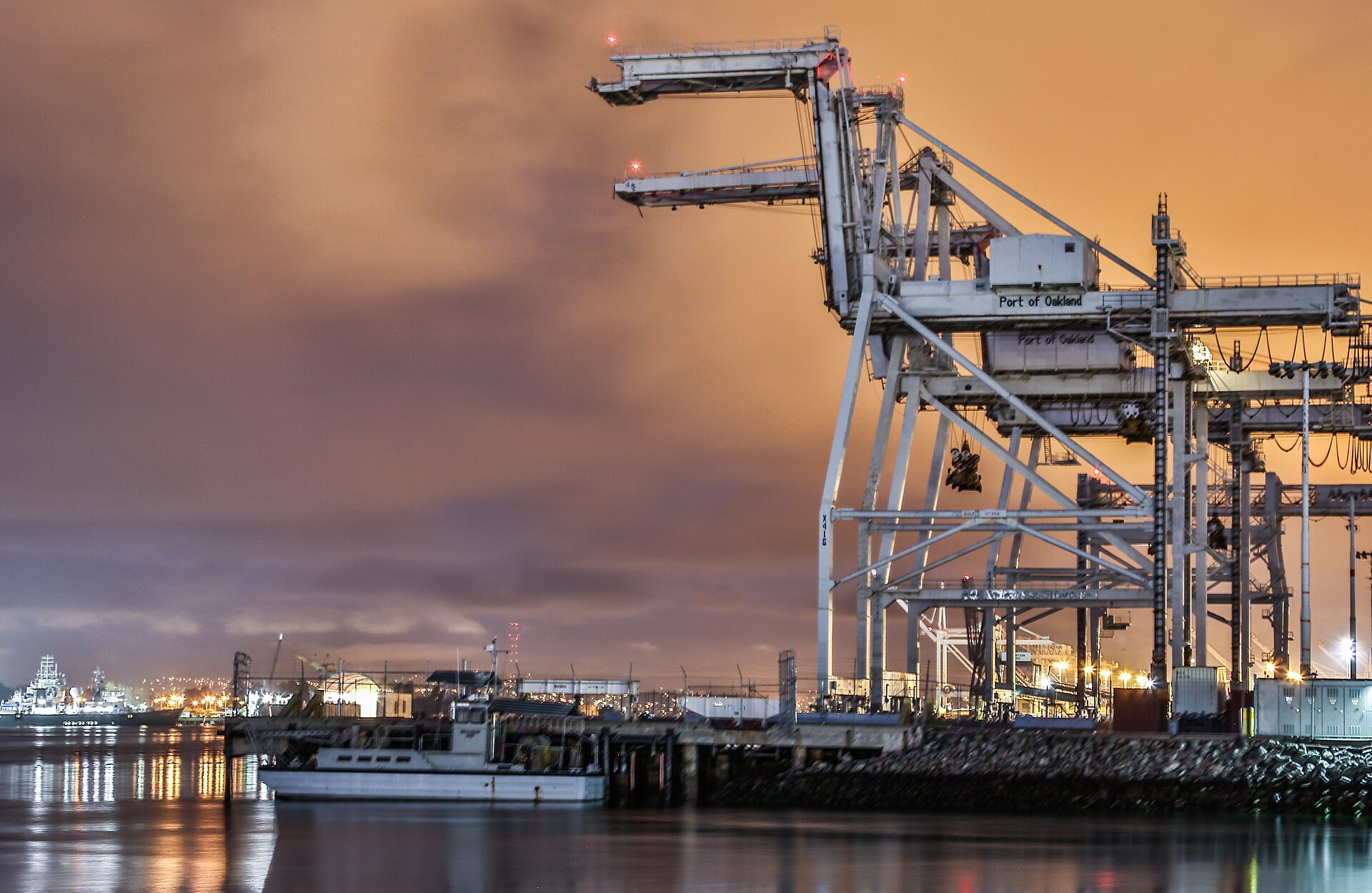
Hero · Port of Oakland Cranes (dawn), 2014 · Tony Webster · CC BY 2.0

The assignment

Hold the whole story.

This is not a Chamber brochure. Not a sales pitch. It is a chronicle of a place — West Oakland — written by someone born in Oakland and living in the Bay Area / East Bay orbit, watching capital, culture, and concrete rewrite the same few miles again.

The land was cared for before the grid. Ranchos became rails. Rails became a port. The port called people west during the Second Great Migration and made Seventh Street a cultural capital. Then freeways and “renewal” cut the neighborhood open. People organized anyway. Diesel settled into lungs. Artists filled the empties. Soft reopenings brought joy and rent pressure in the same breath. Now industrial campuses and AI labs are leasing the corridor.

The assignment is to track what arrives on this corridor — city-confirmed Tesla activity in one form, lease-reported Prometheus chatter, and a coal-export fight at the former Army Base that the courts have left standing — without erasing who paid for the air, the rail, and the right-of-way. Downtown compute stays off this spine. Embrace the history. Love the land. Never fear it.

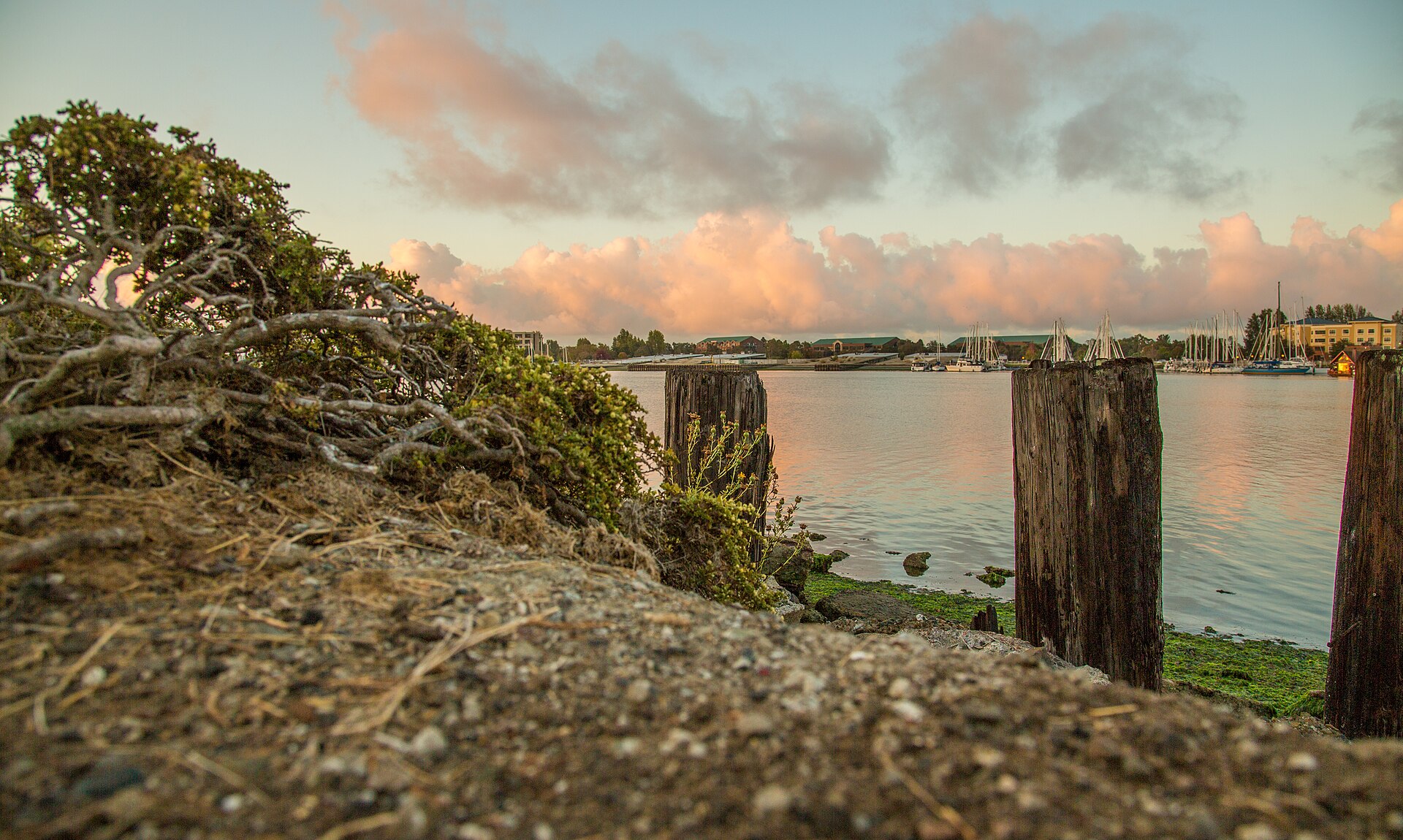
Ambient · Oakland Shore / estuary, 2014 · Tony Webster · CC BY 2.0

Chapter 01 Before the Spanish claim · Chochenyo / Huchiun caretaking

Land before the grid.

West Oakland sits on ancestral Ohlone land — Huchiun territory in the Chochenyo-speaking East Bay world. Long before survey lines and freights, people managed this shoreline with fire, harvest, and seasonal movement. That is not a romantic poster. It is land practice: intentional, skilled, interrupted by conquest.

Spanish claims in the 1770s and the mission system forced removal, labor, and cultural rupture across the Bay. Later anthropology tried to write Ohlone communities as finished. They were not. The Muwekma Ohlone Tribe and other lineages continue — still fighting federal recognition gaps, still putting archaeology and memory to work against erasure.

Any honest chronicle of “Tech Oakland” starts here: the corridor was never empty. It was taken, remapped, and industrially thickened. Loving the land means naming that sequence without softening it into myth.

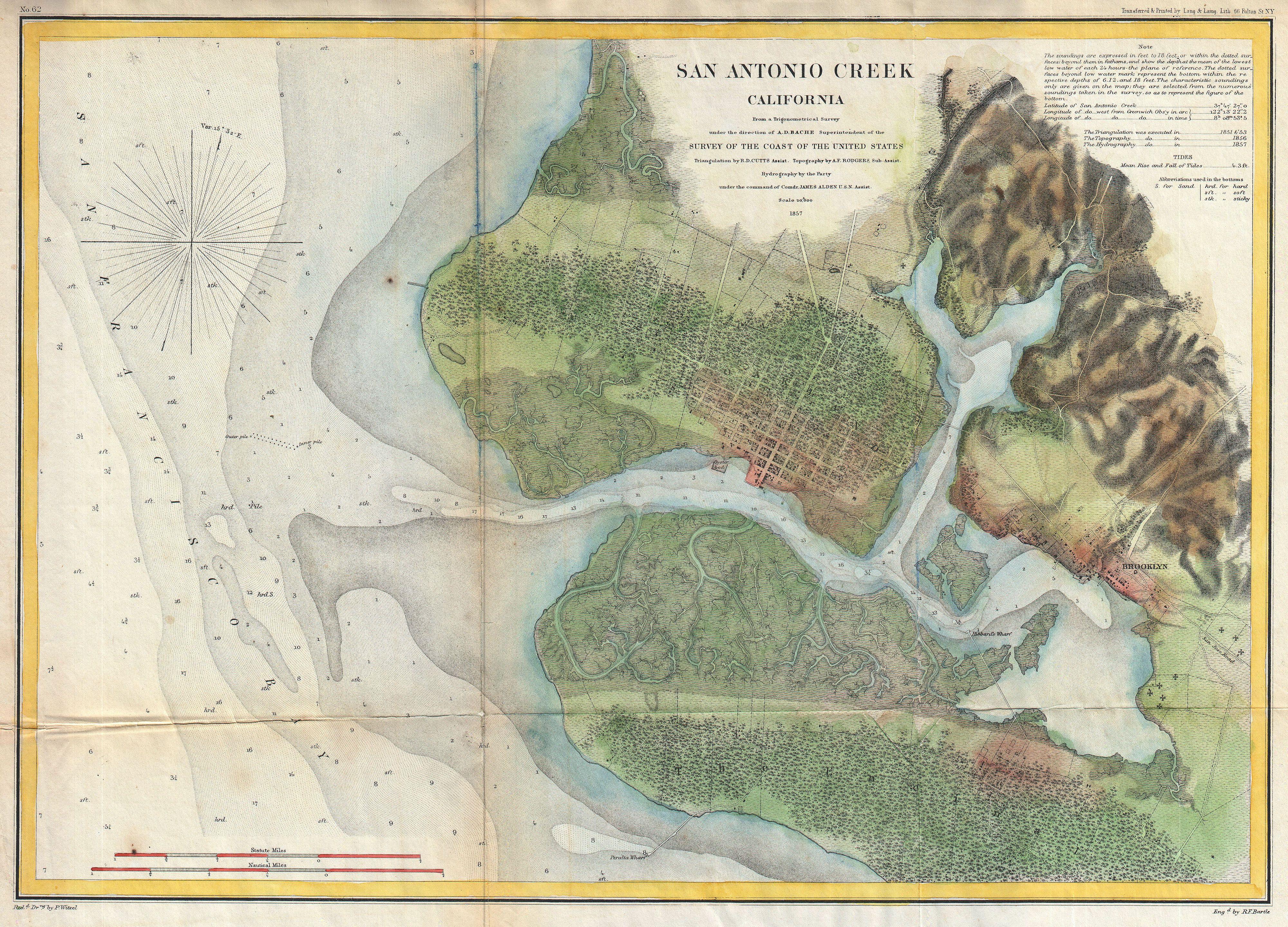
U.S. Coast Survey chart of San Antonio Creek / Oakland estuary shoreline, 1857 · Public domain (US federal). No verified Ohlone ethnographic photo with clear reuse rights was available; the chart stands in for the shoreline before the modern port.

Chapter 02 1820 — American takeover — railroad terminus

Ranchos & rails.

In 1820, the last Spanish governor of California granted Luís María Peralta the roughly 44,800-acre Rancho San Antonio — land that would become Oakland, Berkeley, Alameda, Emeryville, and more. Mexican independence confirmed the grant. Peralta’s sons built the first Spanish-speaking ranch communities of the East Bay; Vicente’s share covered much of what became northern Oakland and West Oakland’s wider map.

After the U.S. takeover and Gold Rush statehood, squatters and legal attrition carved the rancho down. Horace Carpentier and allies incorporated Oakland on seized ground. Title fights drained Peralta holdings even when courts eventually recognized claims.

Then the railroad arrived. In the late 1860s the Central Pacific built the Oakland Long Wharf at Oakland Point — today’s Port of Oakland shoreline — and planted major rail yards in West Oakland. The transcontinental terminus made the neighborhood an industrial hinge: cars, shops, porters, warehouses. Southern Pacific kept those yards humming deep into the twentieth century. The grid that followed was not neutral infrastructure. It was a machine for moving goods through a place already contested twice over.

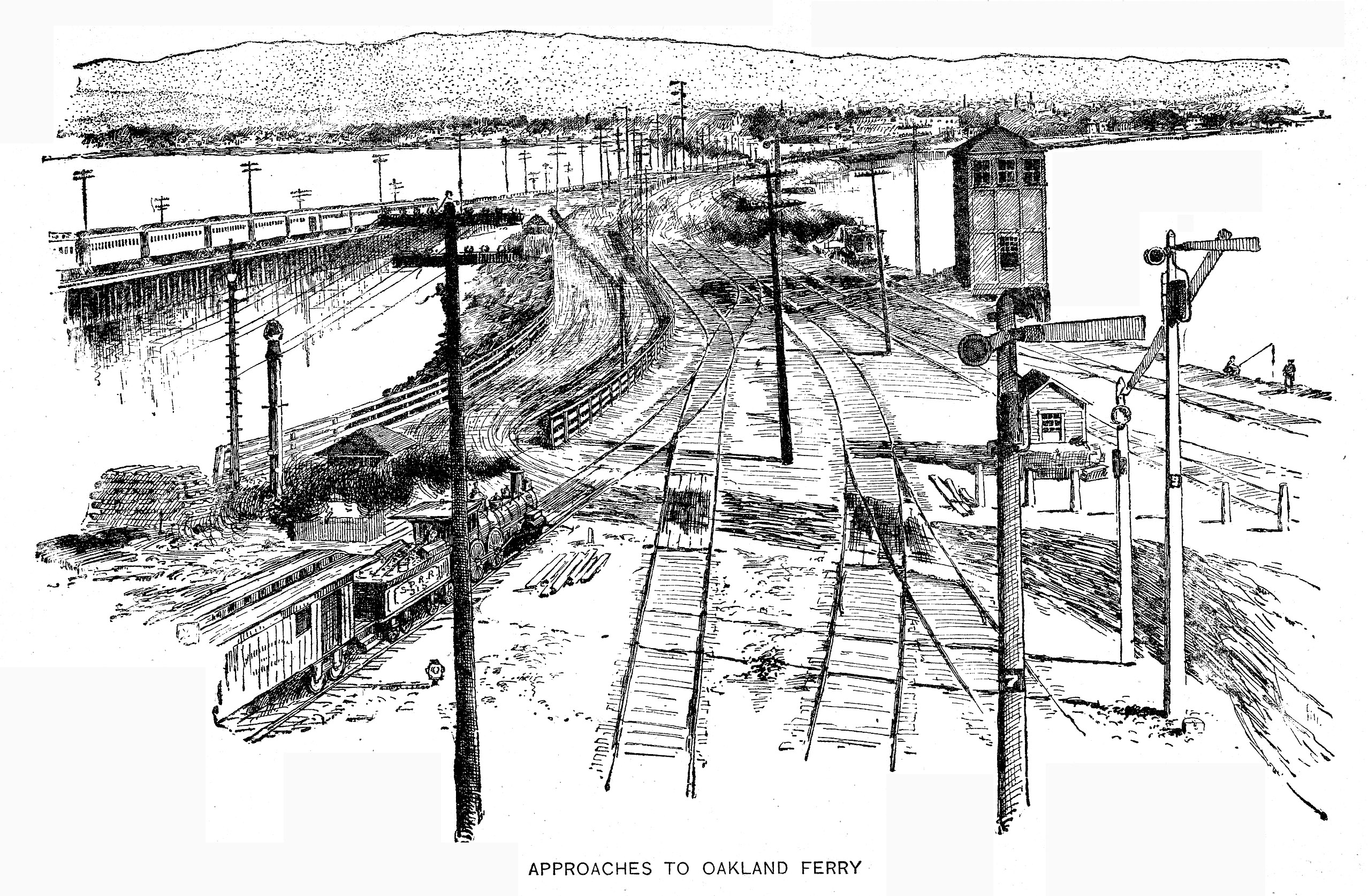
Approach to Oakland Long Wharf, 1889 engraving · From Stanley Wood, Over the Range to the Golden Gate · Public domain

Chapter 03 Port growth · WWII shipyards · Second Great Migration

Port & migration.

West Oakland was already a Black neighborhood before the war — small, rooted, tied to rail work and the Brotherhood of Sleeping Car Porters’ West Coast presence. World War II detonated the scale. Shipyards and military logistics needed labor. Southern Black families rode the Second Great Migration west. Reporting commonly places Oakland’s Black population at roughly 8,000 in 1940 and about 21,000 by 1945 — a wartime surge, not a rumor.

Housing was scarce and redlined. Japanese American neighbors were forced into wartime incarceration even as the Black population grew. Seventh Street became daytime commerce and nighttime music — jazz and blues clubs that earned the corridor a “Harlem of the West” reputation alongside San Francisco’s Fillmore. Slim Jenkins, Esther’s Orbit Room, Lincoln Theatre, local labels and porters carrying records east on the cars: cultural capital built in the shadow of the port. (No rights-cleared nightlife photograph was available; the names stay in the prose.)

This is the West Oakland many still mean when they say home — Black ownership, Black nightlife, Black middle-class footholds held against a region that tried to keep Black buyers out of the suburbs. It did not last untouched.

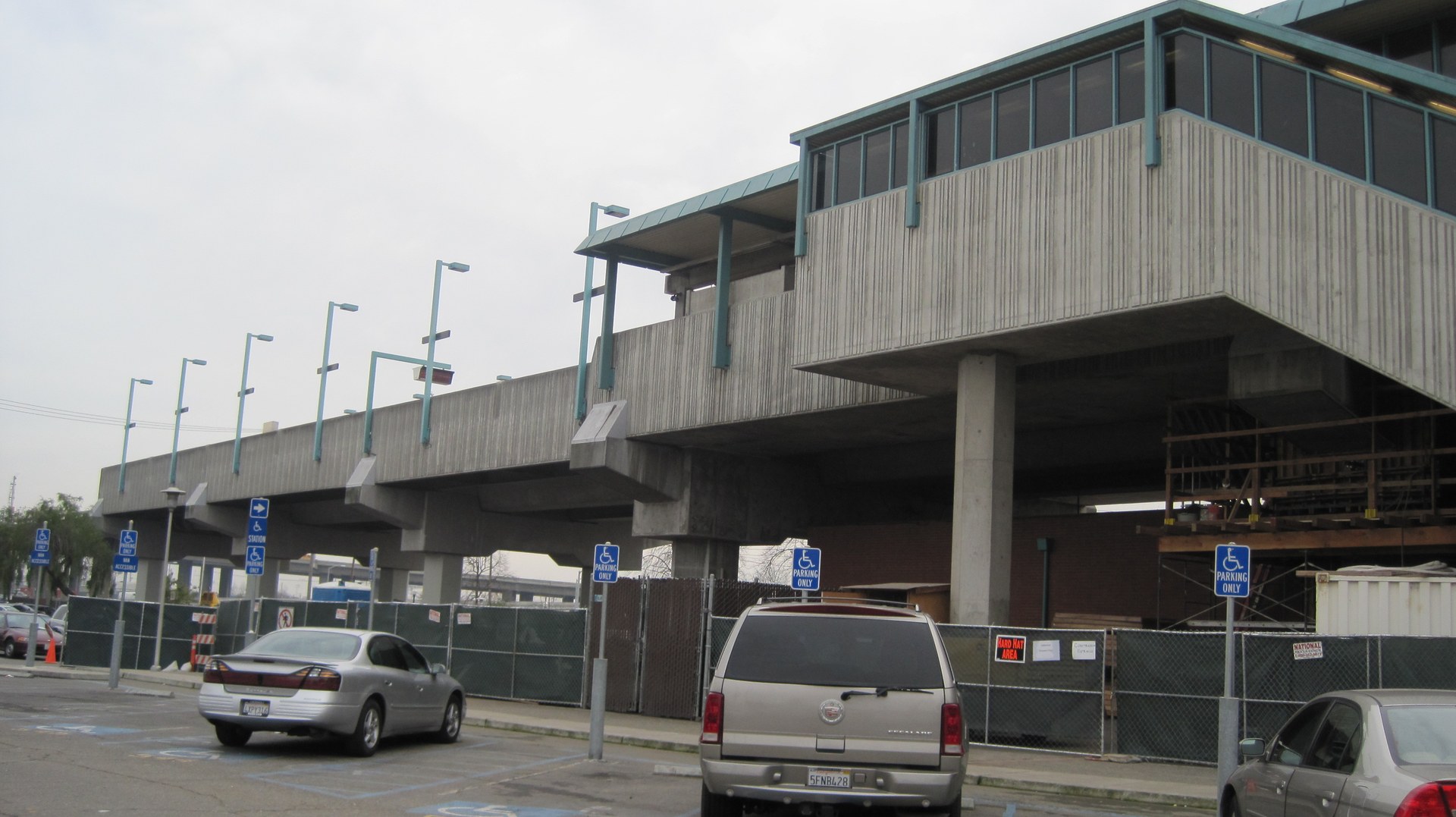
West Oakland BART station exterior on the modern Seventh Street corridor
West Oakland BART exterior, 2010 · BrokenSphere · CC BY-SA 3.0 — corridor after the cut

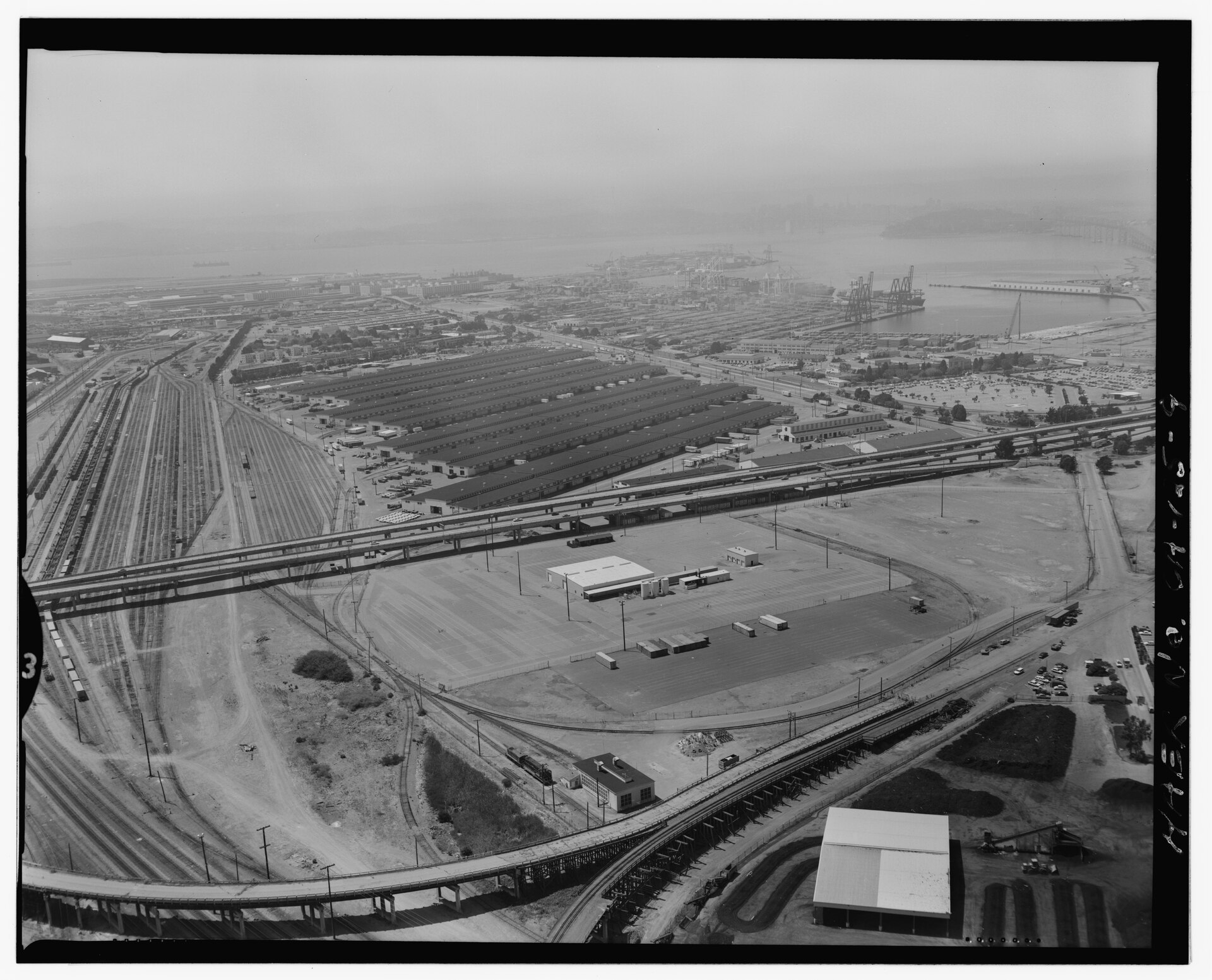
Primary · Aerial, Oakland Army Base, HAER recordation 1994 · Public domain (HAER / Ordenana et al.). Nightlife photo intentionally omitted.

Interlude

What the corridor cost.

~600
Families displaced by Cypress construction

Cited in freeway-reroute research on the 1950s Cypress build.

5k–9.7k
Housing units lost in West Oakland (1960s estimates)

Range reported in fair-housing / urban-renewal histories — treat as a span, not a single census figure.

42
Killed when Cypress collapsed, Loma Prieta 1989

Neighborhood residents climbed the wreckage first.

−31%
Diesel particulate matter, West Oakland avg. 2017→2024

WOEIP / WOCAP progress reporting — gains real, disparities unfinished.

Chapter 04 Cypress / I-880 · BART cut · urban renewal

Freeway & fracture.

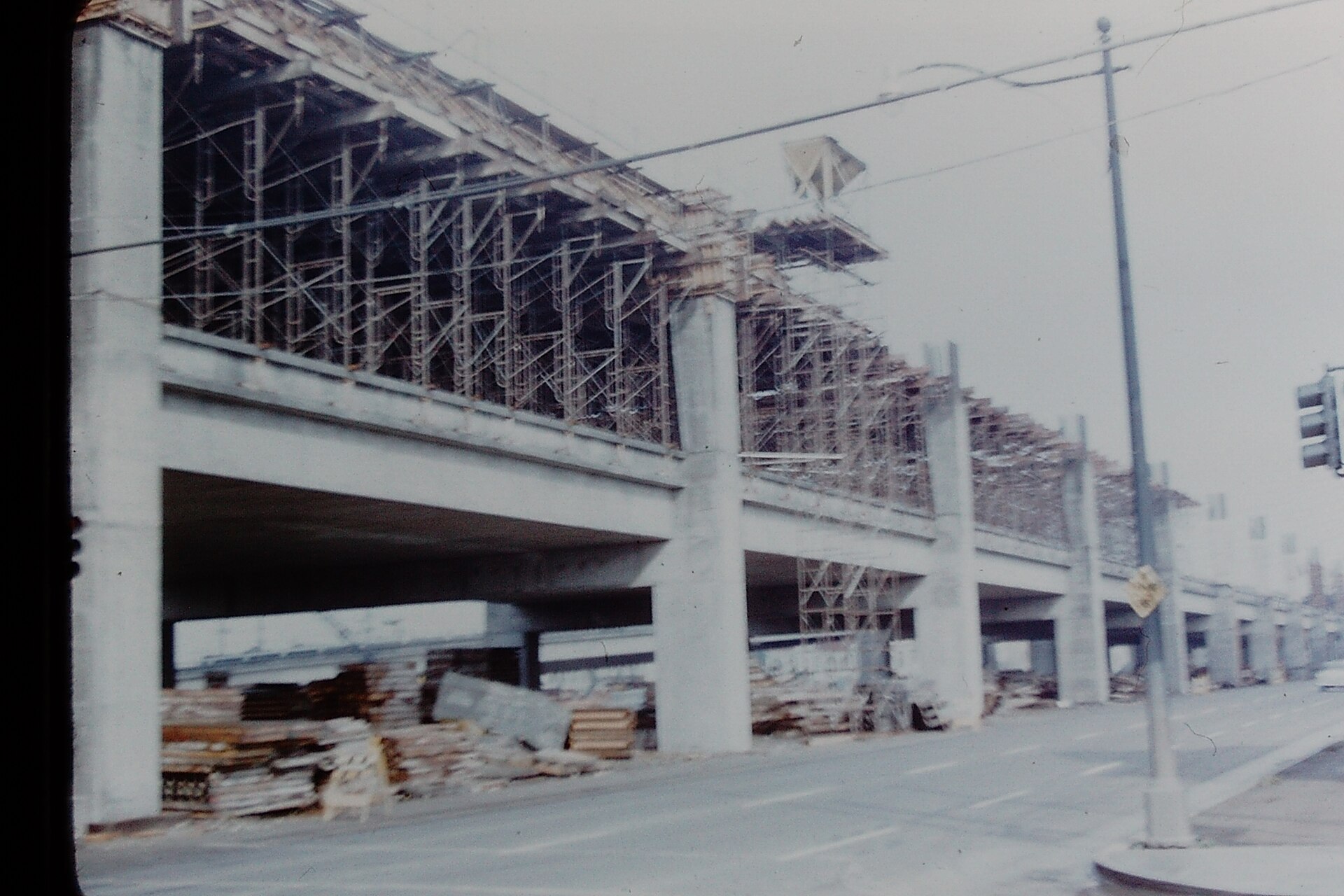
Mid-century planners called it modernization. West Oakland lived it as a wall. The double-deck Cypress Structure (I-880) opened in 1957 and bisected the neighborhood — demolitions, noise, diesel, a concrete shadow where houses and businesses had been. Grove-Shafter (I-980) and MacArthur (I-580) tightened the cage. Research on the later Mandela Parkway rebuild notes roughly 600 families displaced by Cypress construction alone (press-/research-reported); broader urban-renewal tallies put West Oakland housing losses in the thousands during the 1960s (range in fair-housing histories — treat as a span).

Seventh Street took hit after hit: a vast regional postal facility wiped a swath of homes near the corridor; elevated BART and its West Oakland station (service opening in 1974) carved the commercial spine and left a shadowed under-track world. What had been a Black Main Street became infrastructure’s leftover.

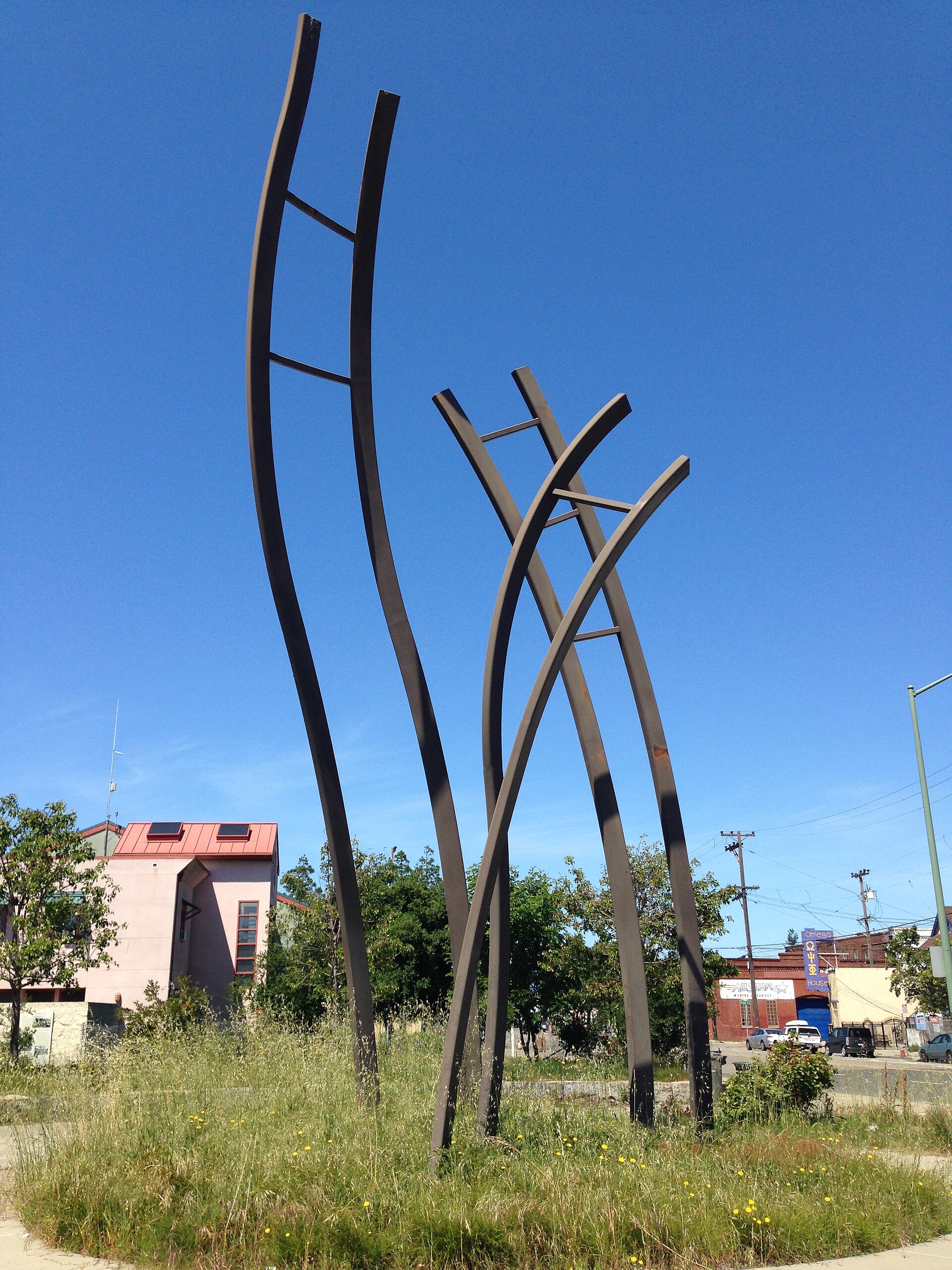
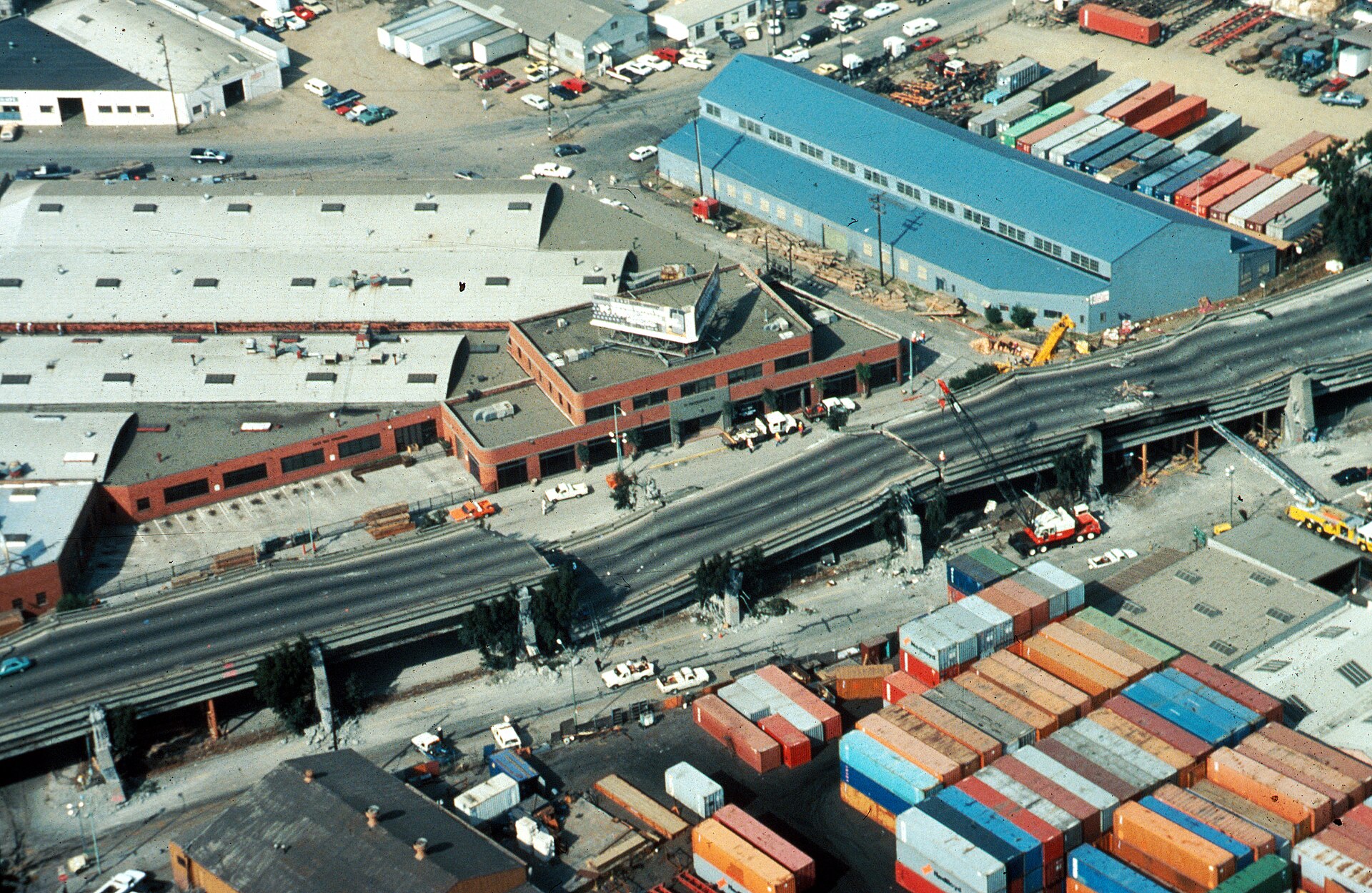
On October 17, 1989, Loma Prieta dropped the Cypress upper deck onto the lower. Forty-two people died there (standard disaster record). Neighbors arrived with ladders before the official machines. Caltrans later rerouted I-880 west around the residential fabric; Mandela Parkway — named for Nelson Mandela — took the old roadbed as a ground-level boulevard with a green median. Reconnection was real. Repair was not the same as restitution.

Cypress Freeway Memorial Park along the Mandela corridor
Cypress Freeway Memorial Park, 2016 · Lthomas2 · CC BY-SA 4.0
Aerial view of the collapsed Cypress Viaduct after the 1989 Loma Prieta earthquake
Collapsed Cypress, 1989 · H.G. Wilshire, USGS · Public domain — documentary, not spectacle

Primary · Cypress Street Viaduct under construction, 1957 · Robert Owen Winkler · Public domain. Collapse shown small beside the memorial — respect over sensational crop.

Chapter 05 Black Panther Party · churches · community orgs

Organize & survive.

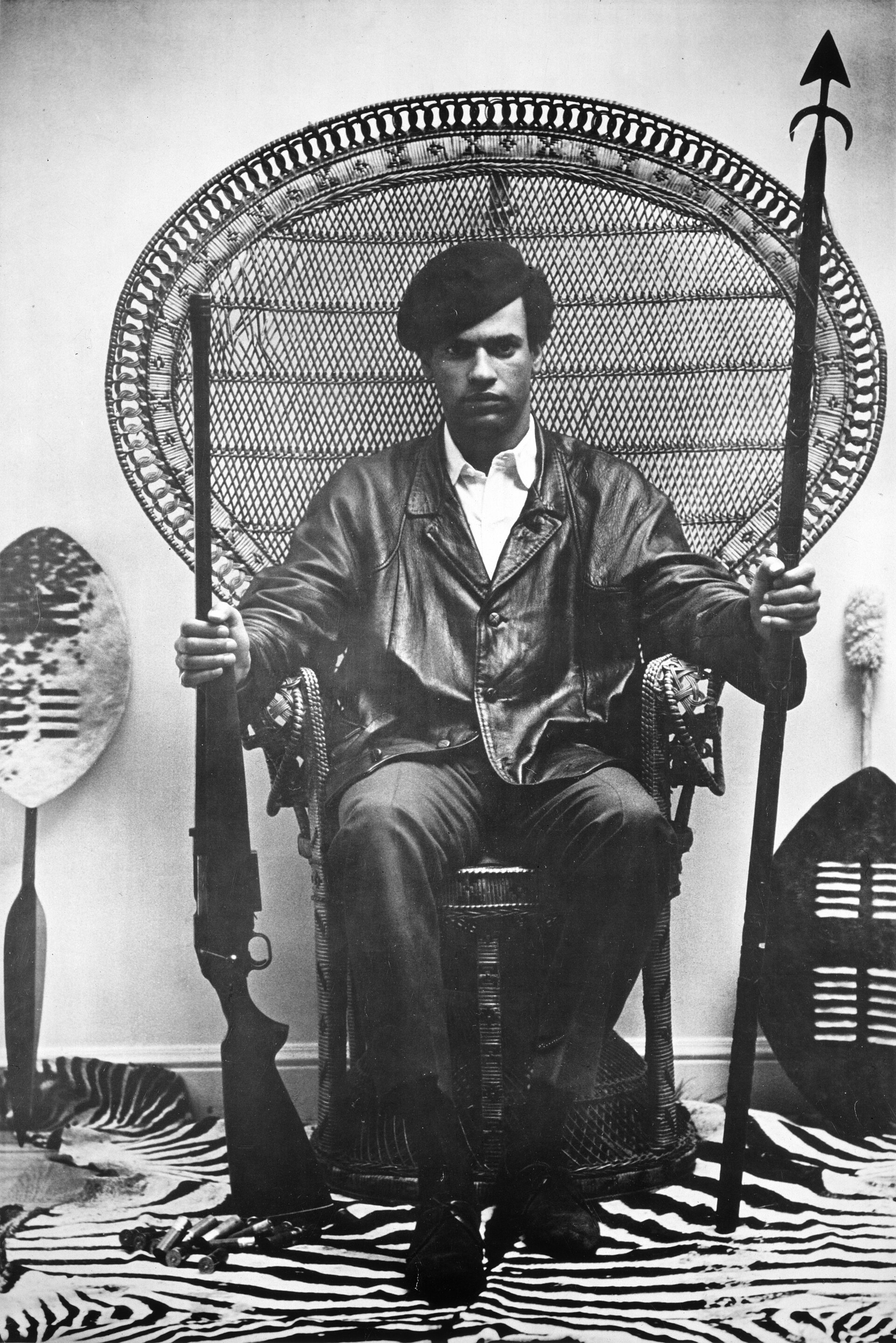
Oakland did not wait politely for policy to repent. In October 1966, Huey P. Newton and Bobby Seale founded the Black Panther Party for Self-Defense in Oakland — students who had met at Merritt College, drafting a Ten-Point Program that put police violence, housing, education, and survival programs on the same page. The Party’s national fame often eclipses its local texture: free breakfasts, clinics, community monitoring, and a generation of organizers who treated West Oakland’s abandonment as a political fact, not a weather pattern.

Churches, block clubs, and later environmental and housing nonprofits kept the through-line when headlines moved on. Streetlights won after residents forced the city’s hand. Jobs-on-BART fights largely failed at concessions and still trained a muscle for coalition. Into the 2010s and 2020s, figures like Elaine Brown pushed affordable housing back onto Seventh Street itself — memory as construction, not nostalgia.

Organizing here is not a museum wing. It is why any new lease on Mandela Parkway inherits a public that already knows how to read a permit board.

Huey P. Newton portrait, c.1967 · Blair Stapp; Library of Congress Yanker poster collection · Public domain (no known restrictions) — attribute the photographer

Chapter 06 Diesel corridor · redlining afterlives · West Gateway

Poison & policy.

HOLC redlining maps of the 1930s graded West Oakland toward the “hazardous” end — race written into mortgage risk. That cartography did not expire when the maps were filed away. It steered who could buy, where industry concentrated, and which lungs sat beside the port’s truck routes.

The Port of Oakland is economic oxygen and a top local pollution source: ships, cargo gear, rail, diesel trucks threading residential blocks. In 2002, neighbors working with researchers published Neighborhood Knowledge for Change; Margaret Gordon and Brian Beveridge founded the West Oakland Environmental Indicators Project to keep community science in the room. WOEIP helped force truck-route changes, sat at collaborative tables with EPA and the Air District, and kept hyperlocal monitoring alive when a single rooftop sensor was not enough.

Recent WOCAP progress reporting describes average diesel particulate matter down about 31% from 2017 to 2024 (WOEIP / WOCAP progress reporting), with exposure falling further — and still warns that port and rail pieces of the burden remain stubborn, with some impact zones lagging. Clean Ports funding in the hundreds of millions is now chasing zero-emission gear (program-scale press / agency framing). Progress is not absolution. The afterlife of redlining is measurable in air.

The same shoreline is still fighting a coal terminal. On the former Oakland Army Base — city-owned land near the Bay Bridge foot, not Port property — developer Phil Tagami’s Oakland Bulk Oversized Terminal has spent a decade in court. Court-confirmed The 2016 City Council ban on storing and handling coal did not stick to this project (2018 federal ruling). Oakland terminated the lease; a 2023 Superior Court said that was improper; in 2025 the California Supreme Court declined to hear Oakland’s appeal. Press-reported Oaklandside (Darwin BondGraham, Sep. 3, 2026): Utah’s Permanent Community Impact Fund Board heard a Rural Utah Infrastructure Coalition ask for $45 million toward the hub, with a funding vote pinned to Oct. 1, 2026 in Salt Lake City — coalition director Keith Heaton recommending 80 percent Oakland, the rest Longview, Washington. Three months earlier the Trump administration pledged $75 million and said West Gateway would break ground “this summer” and ship over 12 million tons a year by summer 2028 (Oaklandside, June 4). Treat the pledge as administration-announced. Do not write a groundbreaking nobody has photographed. Tagami’s company says its own analysis found no elevated health risk from coal trains through Oakland, 2013–2021 — developer-claimed. Neighbors and No Coal in Oakland are still trying to make the air the obstacle the courts would not be. Assemblymember Mia Bonta’s AB 40 (Community-First Coal Review Act) passed the Legislature Aug 28, was enrolled Sep 2, and was presented to the Governor Sep 8, 2026 — still not law. It would require a full CEQA EIR before discretionary approval of large coal handling, storage, or export facilities over 5 million short tons a year, applying to discretionary approvals pending or made since June 4, 2026. Governor Newsom’s sign-or-veto deadline is Sep 30, 2026. Utah’s funding vote is now pinned to Oct 1 in Salt Lake City — still not a closed check. The Bulk Commodity Ocean Terminals feasibility study is now coalition-published on the Rural Utah Infrastructure Coalition site (Sep 5, 2026) — sponsor PDF, not an independent audit. Opponent-press citing that study (No Coal in Oakland / Ted Franklin, Sep 8): open storage framed as two ~150k-ton open-air stockpiles; project cost ~$430–625M (vs older developer ~$250M talk); build schedule ~53 months pointing at ~2031 first cargo rather than the Oct 2028 claim. Primary PDF still not extracted here (captcha). A separate RUIC Throughput Fund public hearing was noticed for Sep 10, 2026 in Provo; no minutes/after-action on this page yet. Diesel down 31 percent is not a hall pass for coal dust.

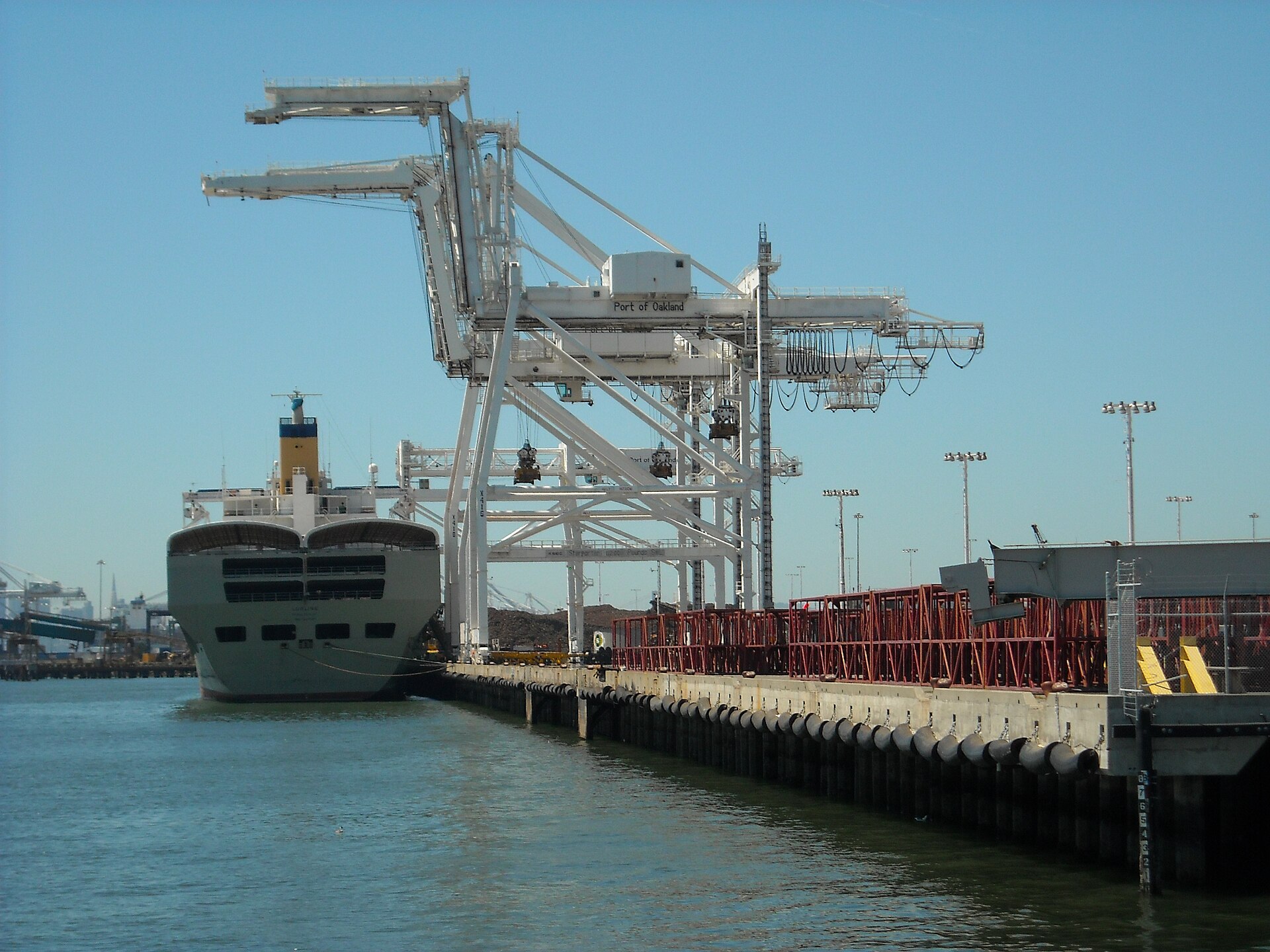
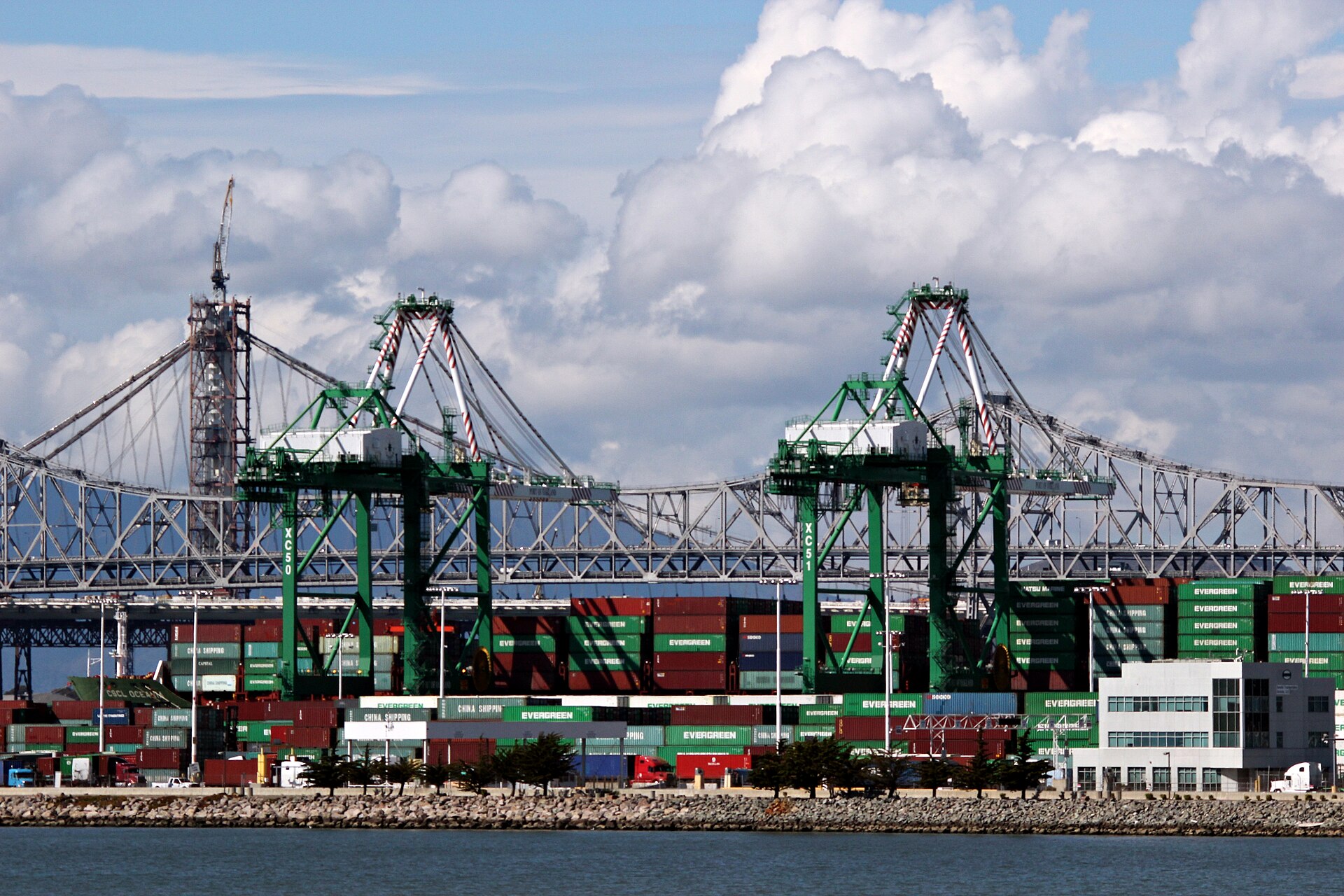
Container cranes @ Port of Oakland, 2009 · Daniel Ramirez · CC BY 2.0
Chapter 07 Deindustrialization · American Steel artists · SKB purchase

Artists & empties.

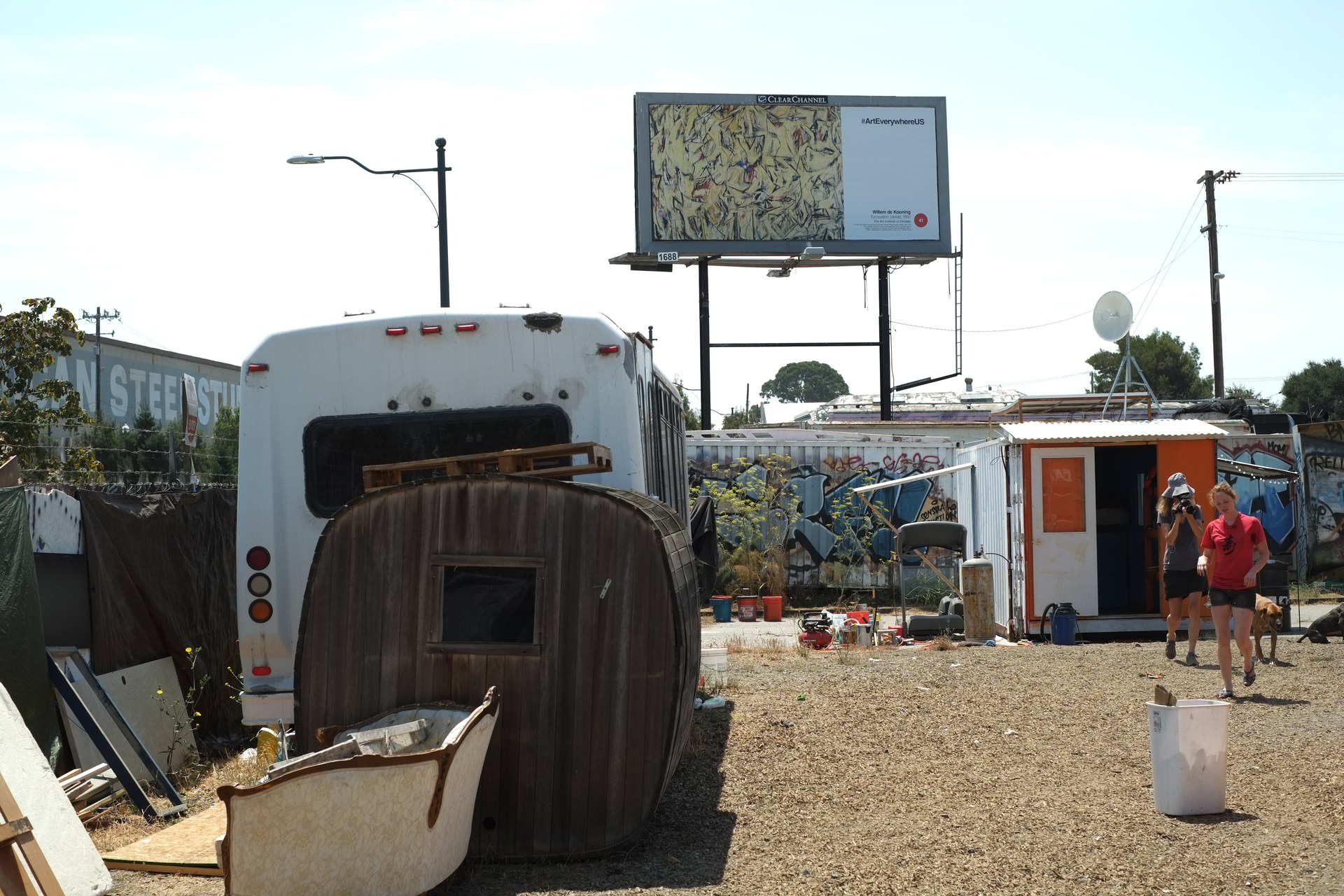
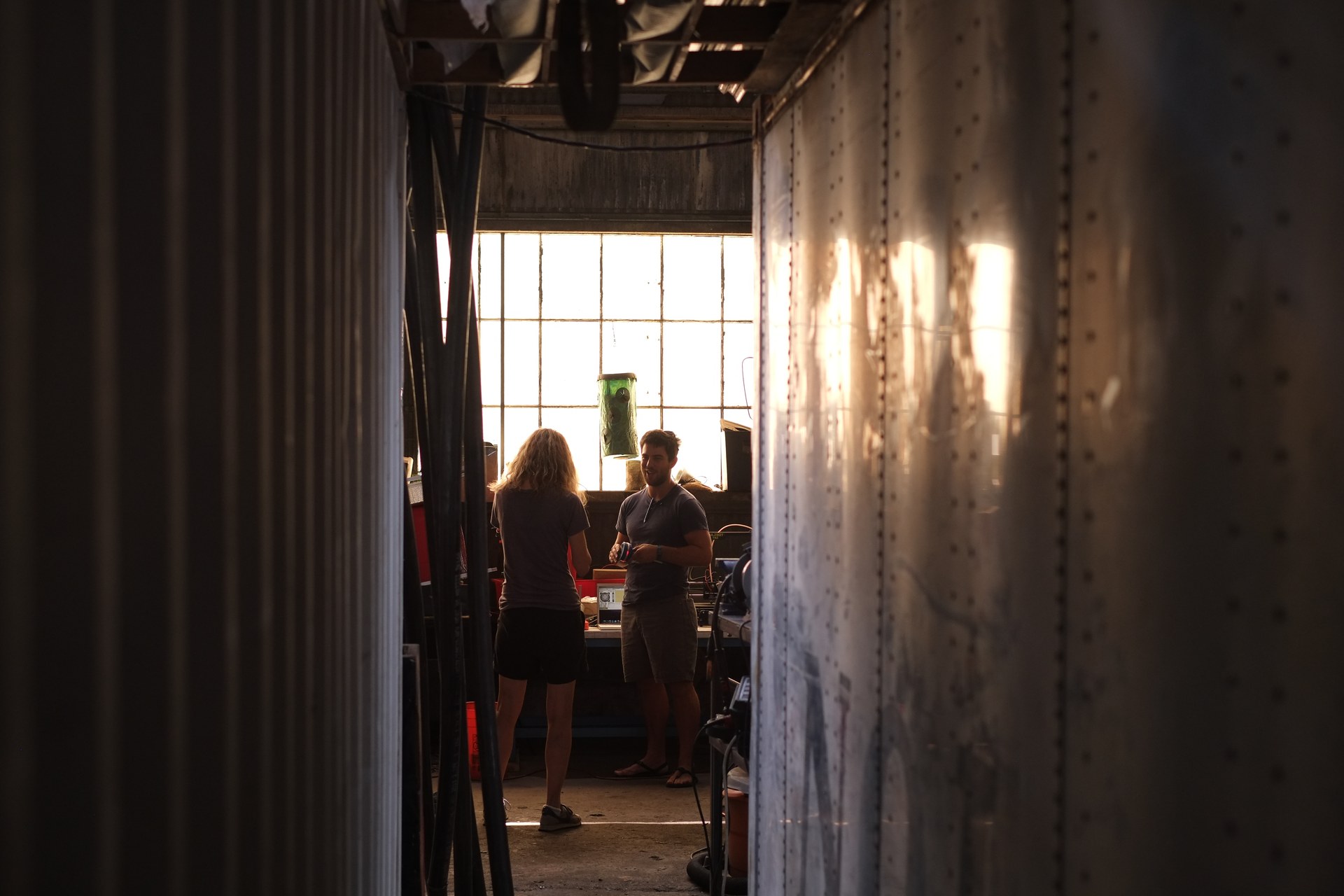
When heavy industry thinned, the empties did not stay empty. American Steel — the big Mandela Parkway complex with deep industrial bones — became a trailblazing artist and fabricator commons, including a major Burning Man-adjacent build culture. Cheap cubic footage, shared tools, late nights, public art that would not fit in a white cube.

In 2021, Portland-based ScanlanKemperBard (SKB) bought the roughly 13–14 acre campus (press-reported acreage and $82.5 million) and began converting it toward an advanced manufacturing / tech / clean-energy tenant mix. Artists and small fabricators were pushed out as the vision shifted. That tension is not a side note. It is the hinge between Chapter 07 and Chapter 09: the same buildings that held welders and kinetic sculpture are now the address in every lease rumor.

Empties absorb whoever can pay the next rent. West Oakland has watched that law operate for a century. The question is never whether capital notices vacant square footage. It is who gets written into the building’s next sentence.

Workshop interior inside American Steel Studios during the artist era
Interior workshop, American Steel Studios, 2014 · Nicolás Boullosa (faircompanies) · CC BY 2.0

Exterior / artist-era campus yard, 2014 · Nicolás Boullosa (faircompanies) · CC BY 2.0

Chapter 08 Pacific Pipe · Ballers / Raimondi · Prescott Market

Soft reopen.

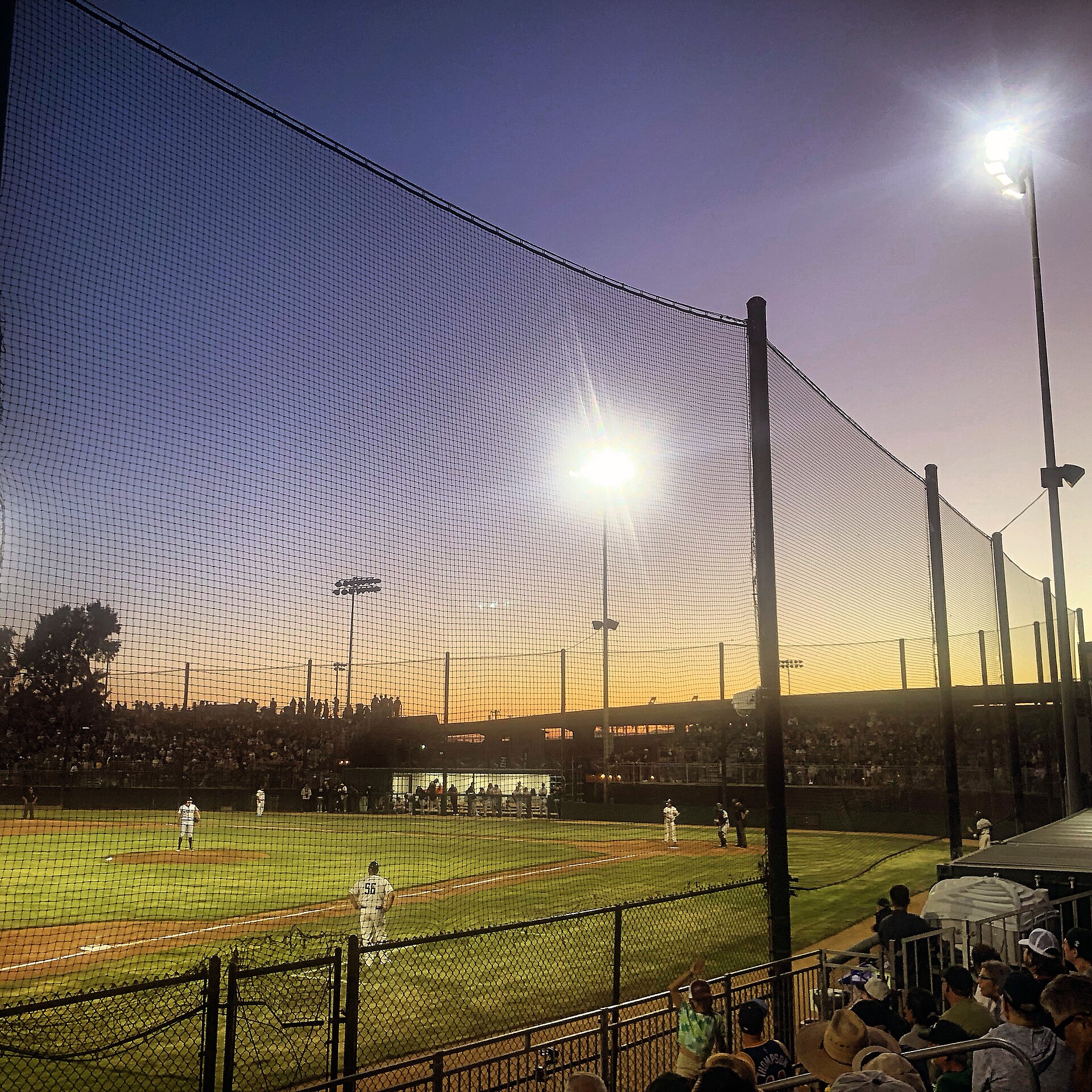
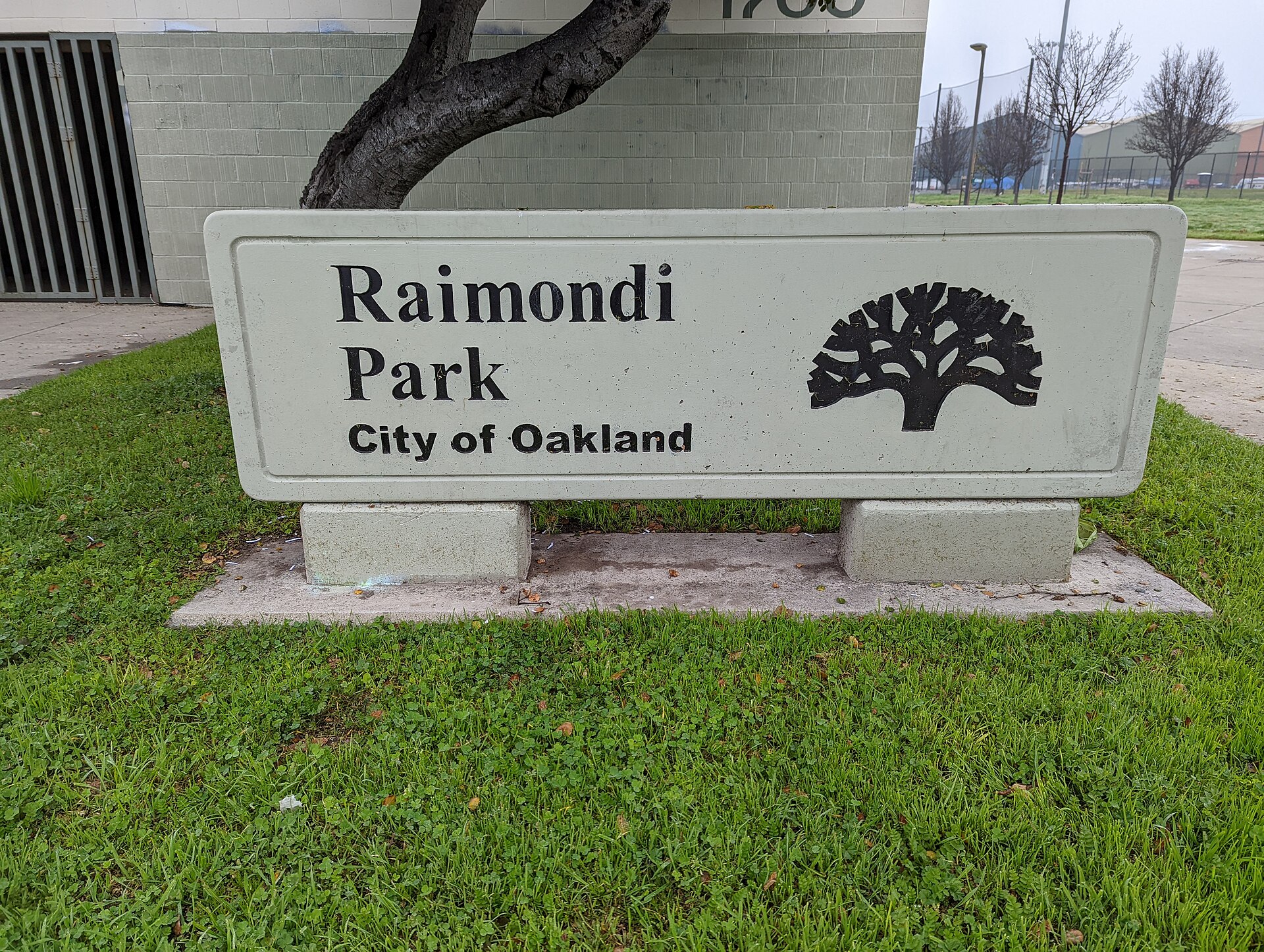
Joy returned with price tags attached. Pacific Pipe opened as a large climbing gym in the old industrial shell in 2022 (press-reported). The Oakland Ballers brought Pioneer League baseball to Raimondi Park — West Oakland’s big park, refurbished for a few-thousand-seat home — with a later multi-year lease extension (press-reported) cementing the stay. Prescott Market, a food hall from Joe Ernst, opened in 2025 (press-reported) across the street’s orbit, with night-market energy on game evenings and an honest local hope of punching a hole in the food desert.

Raimondi Park

Pacific Pipe

Climbing in a pipe-and-steel cathedral. Adaptive reuse that feels good — and marks the artist-to-amenity turn. (No rights-cleared gym photo; park stands in for soft-reopen ground.)

Thumb · Raimondi Park, 2022 · Muboshgu · CC BY-SA 4.0

Oakland Ballers inaugural home game at Raimondi Park

Oakland Ballers

Baseball at Raimondi. Kids, night lights, a franchise arguing that West Oakland can be a destination without apology.

Genie Gratto · CC BY-SA 2.0 · 2024

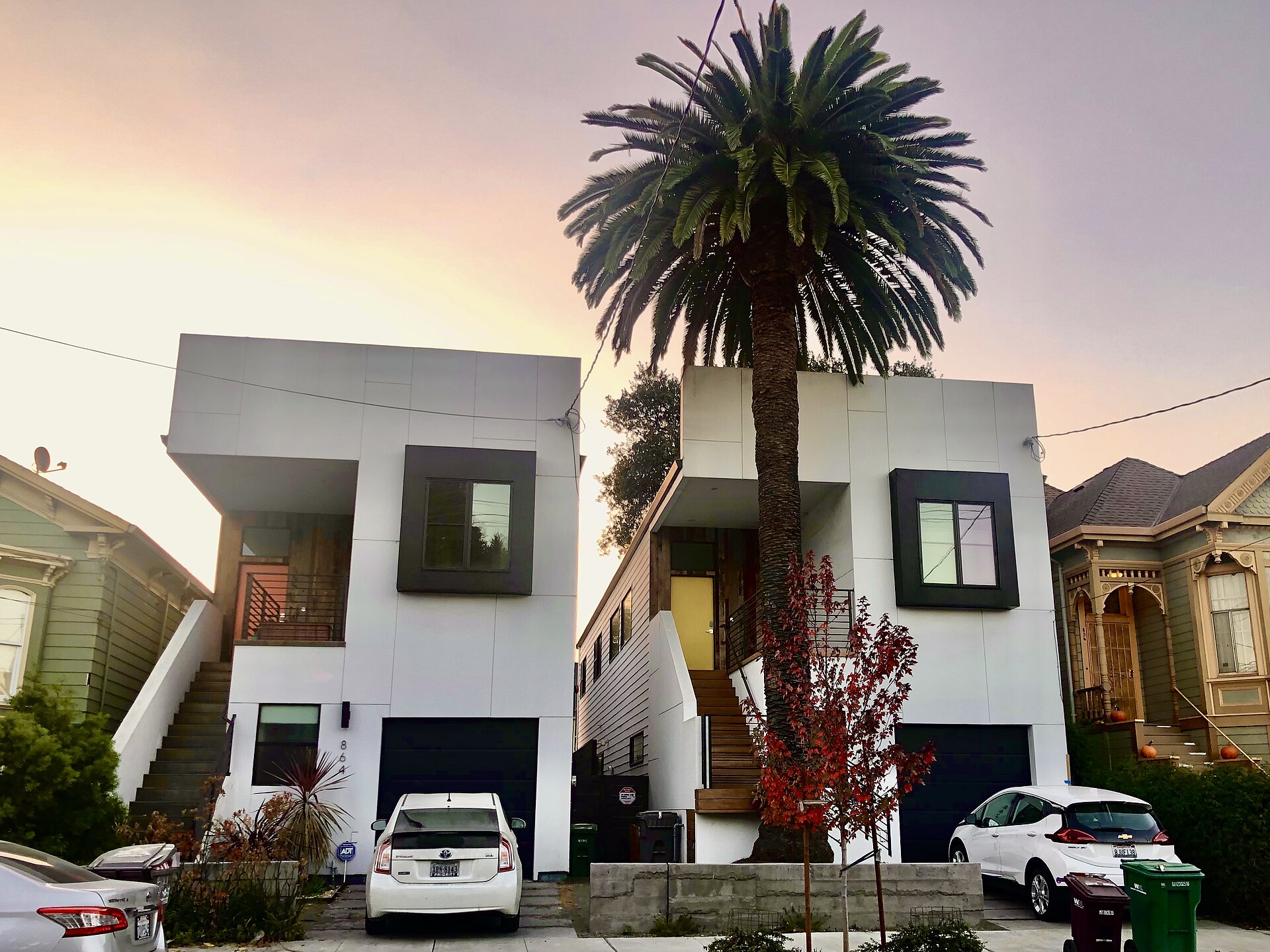
Prescott neighborhood streetscape in West Oakland

Prescott Market

Daily food hall + farmers / night market adjacency. Nourishment and gentrification pressure in the same block.

Prescott streetscape, 2020 · West Oak · Public domain

Hold both truths: a packed ballpark night is beautiful, and beauty raises the heat under long-time renters. Soft reopen is still a reopen of contested ground.

Chapter field · Inaugural Oakland Ballers home game, Raimondi Park, 2024 · Genie Gratto · CC BY-SA 2.0

Chapter 09 American Steel 2026 · Tesla · Prometheus

Tech arrives.

West Oakland’s industrial floor plates — American Steel on Mandela, Port-adjacent power, bay doors that used to hold artists — are suddenly “physical AI” real estate. The story on this page stays on this corridor: who leases here, who gets a city file here, who puts construction signs on Mandela. Regional noise from elsewhere in the East Bay stays off the spine unless it lands a direct hook into West Oakland.

On the American Steel Blocks campus at 1960 Mandela Parkway, labels matter — and as of early September 2026 they are sharper than mid-summer rumor:

City-confirmed Oakland said Tesla Robotics received a business license and zoning clearance for an “automotive repair service” in the American Steel building — a permitted use — and applied for permits to revise two bays. On-the-ground Construction signs are visible on site. That is paperwork and physical leave-behind, not a tweet. Not a Bezos–Musk joint venture.

Lease-reported Trade press and local reporting describe Project Prometheus (Bezos / Bajaj physical-AI startup) as signing on the order of ~100,000 square feet at the same campus. SKB has not publicly confirmed tenant names. As of September 2026 leave-behind, the city still had not received a Prometheus planning application for the West Oakland site.

Guess Square-footage figures for Tesla (often cited around 40,000) rest on thinner public sourcing than the city’s repair-use confirmation. Treat footprint and timeline as open until permits and operations say otherwise.

Downtown compute proposals stay off this spine — leave-behind weather only, not Mandela geography. Tech Oakland on this page means Mandela bay doors, Army Base coal, and Port/air ledger.

Tech Oakland is forming as a stack of leases, clearances, construction signs, and rumors. This chronicle keeps them labeled.

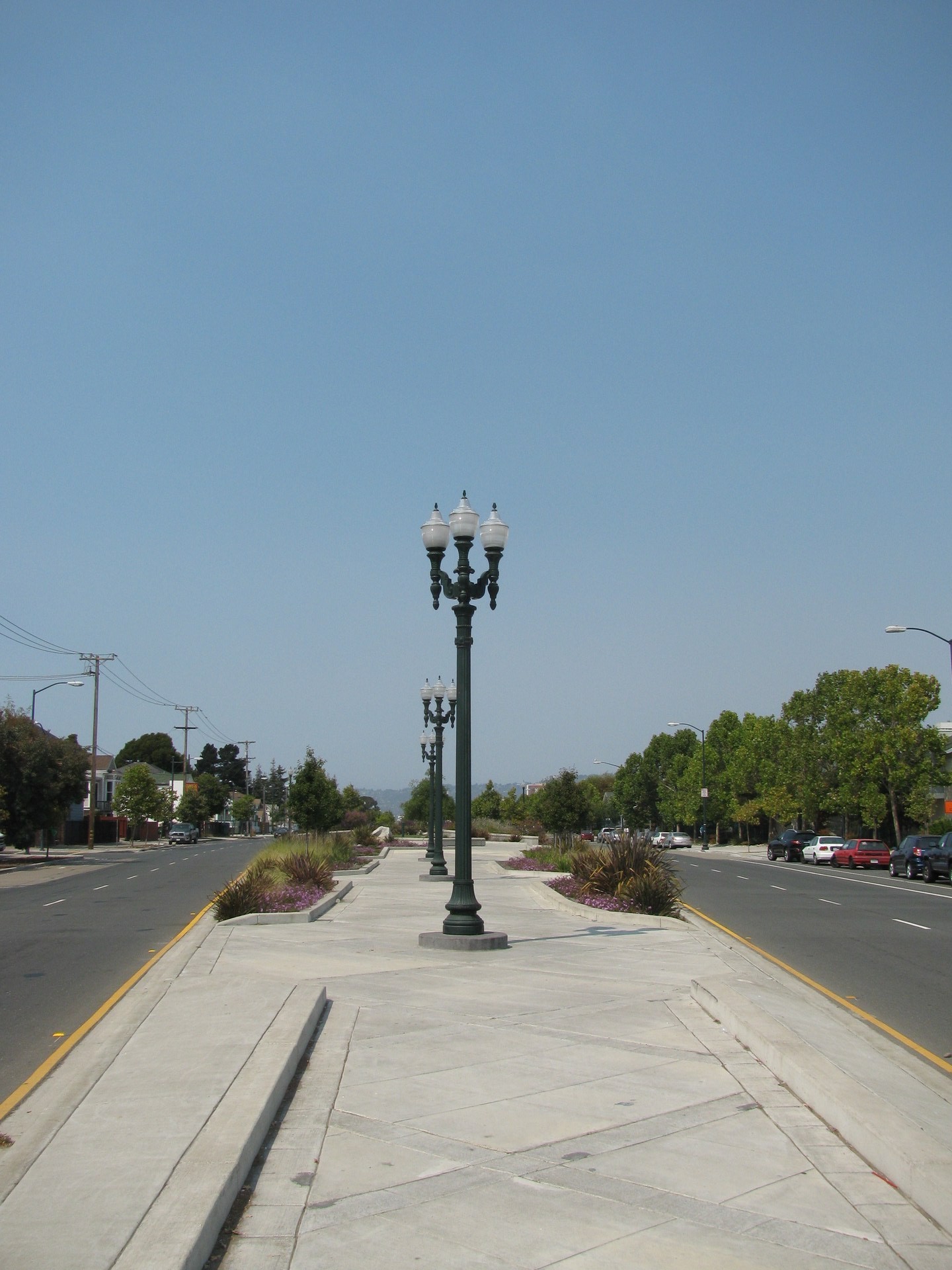
Mandela Parkway landscaped median looking north
Mandela Parkway median, 2009 · Mike Linksvayer · CC0 (rotated upright from source)

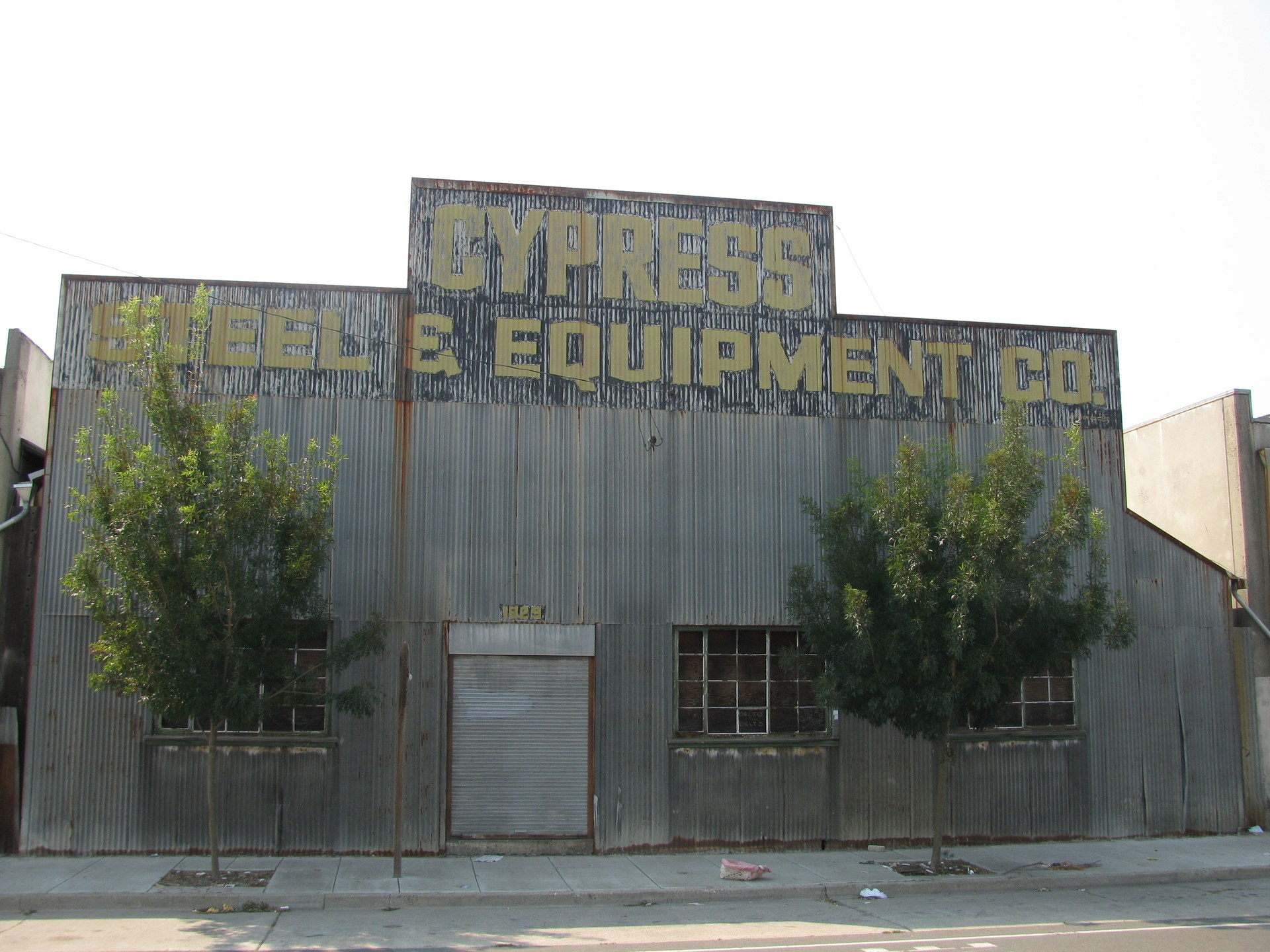
Primary · Cypress Steel & Equipment Co., 1825 Mandela Parkway, 2009 · Mike Linksvayer · CC0

Chapter 10 Closing argument

What we owe the land.

Track Tech Oakland. Watch the bay doors on Mandela. Watch West Gateway the same way. Read the permit boards. Ask who is hired, who is housed, who breathes the next increment of truck trips, coal trains, and power load. Celebrate a Ballers night and a clean-ports win without pretending the ledger is balanced.

West Oakland’s history is not a branding asset for the next tenant improvement. It is the reason the corridor exists — Ohlone caretaking, Peralta grants broken by squatters, rail empire, Black migration and Seventh Street genius, Panther survival programs, WOEIP clipboards at the truck route, artists who kept the empties alive until the sale.

Loving this place means refusing amnesia. The long arc toward Tech Oakland runs through every chapter above. What we owe the land is continuity of memory: do not erase who paid for the corridor while you celebrate what lands on it next.

Port of Oakland — clouds and cranes, 2012 · Basil D Soufi · CC BY-SA 4.0

On the pad · not yet history

What comes next.

Open items only. Nothing here is treated as settled until the city file, the lease disclosure, or the loading dock says so.

West Gateway · former Army Base Finance-pending

Coal terminal money

Utah’s Community Impact Fund Board heard a $45 million ask on Sep. 3, 2026; the funding vote is pinned to Oct. 1, 2026 in Salt Lake City (Oaklandside / CIB calendar). RUIC posted its Bulk Commodity Ocean Terminals study Sep 5 (coalition-published). Opponent-press citing that study (NCOIO Sep 8) flags open 150k-ton piles, ~$430–625M cost, ~2031 first cargo — not primary PDF extraction. Throughput Fund hearing noticed for Sep 10 in Provo; minutes/after-action still not on this page. Trump pledged $75 million on June 4 — administration-announced, not a photographed groundbreaking. Court path is already lost for Oakland. AB 40 was presented to Newsom Sep 8 — still not law; Sep 30 deadline. Watch Oct 1, the governor’s desk, and Air District rules — not a loading dock yet.

American Steel · Mandela City-confirmed activity

Tesla bay revisions

Follow Tesla Robotics’ automotive-repair clearance, the two-bay revision permits, and the construction signs already on site. Watch for any change of use beyond what planning has already waved through.

American Steel · Mandela Lease-reported

Prometheus application gap

Lease chatter (~100k sq ft) is ahead of the planning counter. No city application reported as of the September 2026 leave-behind. Community engagement expectations are already on the record from city spokespeople. Not a Bezos–Musk JV with Tesla.

Port & air Funded transition

Clean Ports / WOCAP second half

Diesel is down on average and not done. Port and rail pieces still dominate the leftover burden. Zero-emission equipment rollouts are the next measurable chapter.

West Oakland timeline · selected beats

The dense log.

Failures and harms included. Soft language where sources disagree. This is a chronicle spine, not an encyclopedia.

Before the grid

Ongoing

Huchiun / Chochenyo caretaking

Ohlone land management along the East Bay shore — later ruptured by Spanish missionization and settler claims.

1820 — 1869

1820

Rancho San Antonio granted

Luís María Peralta receives ~44,800 acres covering future Oakland and neighbors.

1850s

American takeover & squatter city

Gold Rush pressure, U.S. title chaos, Oakland incorporation on contested Peralta land.

Harm
1868–69

Long Wharf & rail terminus

Central Pacific plants Oakland Point wharf and West Oakland yards — industrial hinge set.

1930s — 1950s

1930s

HOLC redlining

Federal security maps mark West Oakland toward “hazardous,” steering capital away and industry in.

Harm · afterlives
1940–45

Shipyards & Second Great Migration

Black Oakland grows sharply (commonly cited ~8k→~21k). Seventh Street cultural capital rises — Slim Jenkins, Esther’s, Lincoln.

1957

Cypress Structure opens

Double-deck I-880 bisects West Oakland; homes and businesses fall for the wall.

Fracture

1960s — 1974

1960s

Urban renewal clearances

Postal facility, redevelopment projects, thousands of units lost across competing estimates; Seventh Street torn asunder.

Displacement
Oct 1966

Black Panther Party founded

Newton and Seale in Oakland — self-defense, Ten-Point Program, survival programs.

1974

West Oakland BART opens

Elevated tracks and station parking finish the cut through the old commercial spine.

Fracture

1989 — 2005

17 Oct 1989

Cypress collapses

Loma Prieta; 42 dead on the viaduct. Neighbors rescue first. Structure later demolished.

Disaster
1990s–2005

I-880 reroute & Mandela Parkway

Freeway rebuilt west; Mandela Parkway (construction ~2002–2005 in key phases) reconnects the old roadbed as a boulevard.

2002

WOEIP rooted

Community indicators work → Margaret Gordon & Brian Beveridge found West Oakland Environmental Indicators Project.

2016 — 2026

2016

City Council bans coal storage / handling

2018 federal ruling: the ban does not apply to Tagami’s West Gateway / OBOT terminal. Court path, not a killed project.

Harm · court
2021

SKB buys American Steel campus

Reported $82.5M purchase; advanced manufacturing vision; artist displacement follows.

Tension
2022

Pacific Pipe climbing gym

Soft reopen energy in former industrial volume.

2023–25

Ballers at Raimondi · Prescott Market

Baseball lands; food hall opens 2025; joy and gentrification share the block.

2017–24

Diesel PM down ~31% (avg.)

WOCAP / WOEIP progress — real gains, unfinished disparity, port/rail still heavy.

2025

California Supreme Court declines Oakland coal appeal

After 2023 Superior Court found the city improperly terminated the OBOT lease. Litigation path ends; financing fight remains.

Court-confirmed
4 Jun 2026

Trump pledges $75M for West Gateway coal terminal

Administration-announced. Claimed groundbreaking “this summer,” 12 million tons/year by summer 2028. Not treated as on-the-ground construction.

Announced
3 Sep 2026

Utah CIB hears $45M coal ask · Oct 1 vote

Press-reported (Oaklandside). Coalition recommends 80% Oakland / rest Longview, WA. Funding vote pinned to Oct. 1, 2026 SLC. Site: former Army Base, city-owned, not Port. Not a closed check.

Open · labeled
28 Aug – 2 Sep 2026

AB 40 passes Legislature · enrolled

Community-First Coal Review Act. Full CEQA EIR gate for large coal handling/export (>5M short tons/yr). Presented to Governor Sep 8. Newsom sign/veto deadline Sep 30. Still not law.

Enrolled · labeled
5–10 Sep 2026

RUIC study posted · Throughput hearing noticed

Coalition-published study on ruic.utah.gov (Sep 5). Opponent-press citing it (NCOIO Sep 8): open stockpiles, ~$430–625M, ~2031 schedule — labels only; PDF not extracted here. Sep 10 Throughput hearing noticed; minutes still off page. Not the Oct 1 CIB vote.

Open · labeled
Sep 2026

Tesla city-confirmed · Prometheus lease-reported

Same American Steel block; construction signs on site for Tesla bay work. City-confirmed use vs lease-reported Prometheus — labels differ. Not a Bezos–Musk JV. Downtown compute stays off this spine.

Open

Cite lightly

Sources & reading.

No invented quotes or precision where the record only offers ranges. Start here; verify before you argue.

  • Rural Utah Infrastructure Coalition — “Study Report – Bulk Commodity Ocean Terminals” (Sep 5, 2026); Sep 10 Throughput Fund hearing notice
  • California LegInfo — AB 40 bill status (enrolled Sep 2; presented to Governor Sep 8, 2026; Newsom deadline Sep 30)
  • Alameda Post — “AB 40 Community-First Coal Review Act heads to Governor Newsom” (Sep 2, 2026)
  • Earthjustice — Legislature passes bill requiring environmental review of large coal projects (Aug 28, 2026)
  • Oaklandside — Darwin BondGraham, “Utah’s interest in Oakland coal terminal reignites” (Sep 3, 2026; updated Sep 4)
  • Oaklandside — “Oakland coal terminal will receive $75 million in Trump administration funding” (Jun 4, 2026)
  • Oaklandside — American Steel / Tesla / Prometheus coverage (Aug–Sep 2026 and prior); downtown compute stays leave-behind-only
  • The Dissent — sourcing distinctions on Tesla vs Prometheus at 1960 Mandela
  • West Oakland Environmental Indicators Project (woeip.org) — WOCAP progress, Clean Ports, history
  • Peralta Hacienda Historical Park — Rancho San Antonio narrative
  • Habitat EBSV / fair-housing histories — “West Oakland: Mapped by Destruction”
  • ChangeLab Solutions — Oakland struggle / BART & renewal oral history transcript
  • National Archives / standard BPP histories — October 1966 Oakland founding
  • Wikipedia (Cypress Street Viaduct; History of Oakland) — cross-check dates, then prefer primary/local
  • SFGate / local arts reporting — Seventh Street “Harlem of the West”
  • 48 Hills — American Steel artist displacement (2022)
  • Muwekma Ohlone Tribe scholarship & land acknowledgments — living continuity, not past tense

Image credits

  • Hero — Port of Oakland Cranes (dawn), 2014 · Tony Webster · CC BY 2.0
  • Assignment ambient — Oakland Shore / estuary, 2014 · Tony Webster · CC BY 2.0
  • 01 — 1857 U.S. Coast Survey San Antonio Creek / Oakland estuary · Public domain
  • 02 — Approach to Oakland Long Wharf, 1889 · Stanley Wood / Centpacrr · Public domain
  • 03 — Oakland Army Base aerial, HAER 1994 · Public domain; BART exterior 2010 · BrokenSphere · CC BY-SA 3.0
  • 04 — Cypress construction 1957 · Robert Owen Winkler · PD; Memorial Park 2016 · Lthomas2 · CC BY-SA 4.0; Collapse aerial 1989 · H.G. Wilshire / USGS · PD
  • 05 — Huey P. Newton · Blair Stapp / LOC Yanker · Public domain (attribute photographer)
  • 06 — Container cranes, Port of Oakland, 2009 · Daniel Ramirez · CC BY 2.0
  • 07 — American Steel exterior + interior, 2014 · Nicolás Boullosa (faircompanies) · CC BY 2.0
  • 08 — Ballers at Raimondi 2024 · Genie Gratto · CC BY-SA 2.0; Raimondi Park 2022 · Muboshgu · CC BY-SA 4.0; Prescott 2020 · West Oak · PD
  • 09 — Cypress Steel 1825 Mandela, 2009 · Mike Linksvayer · CC0; Mandela median 2009 · Mike Linksvayer · CC0
  • 10 — Port of Oakland clouds and cranes, 2012 · Basil D Soufi · CC BY-SA 4.0