06
Chapter 06
Diesel corridor · redlining afterlives · West Gateway
Poison & policy.
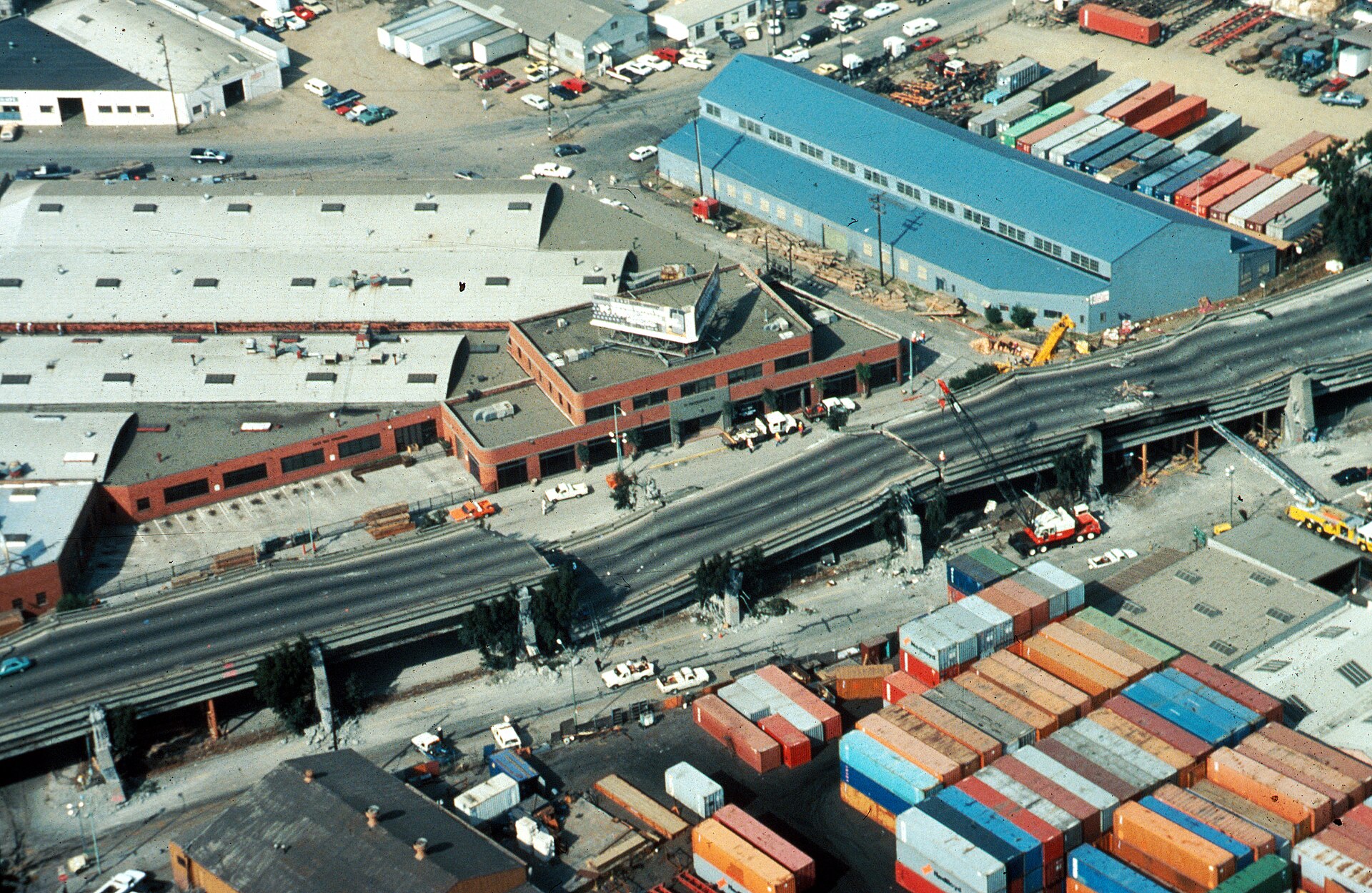
HOLC redlining maps of the 1930s graded West Oakland toward the “hazardous” end — race written into mortgage risk. That cartography did not expire when the maps were filed away. It steered who could buy, where industry concentrated, and which lungs sat beside the port’s truck routes.
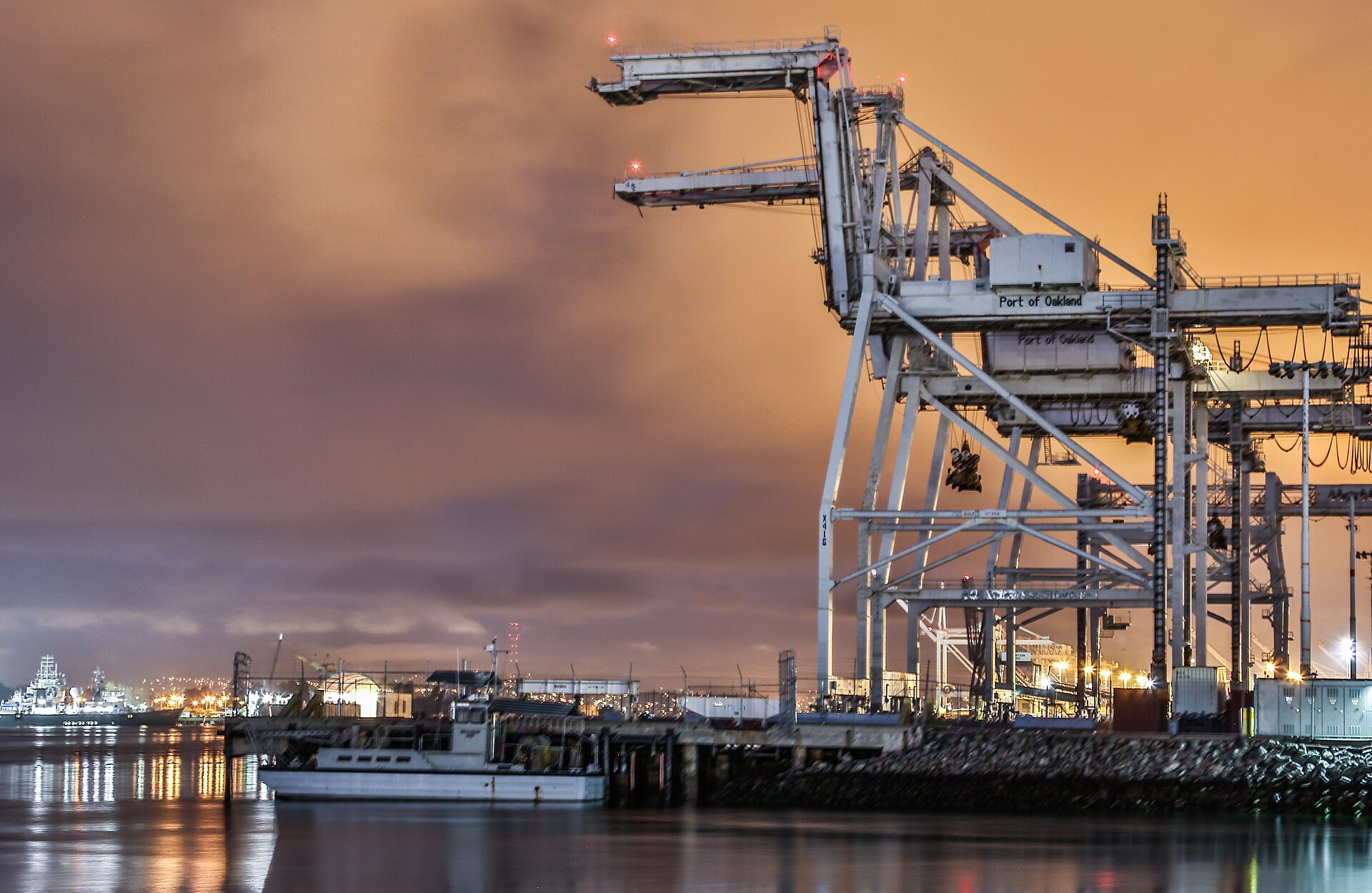
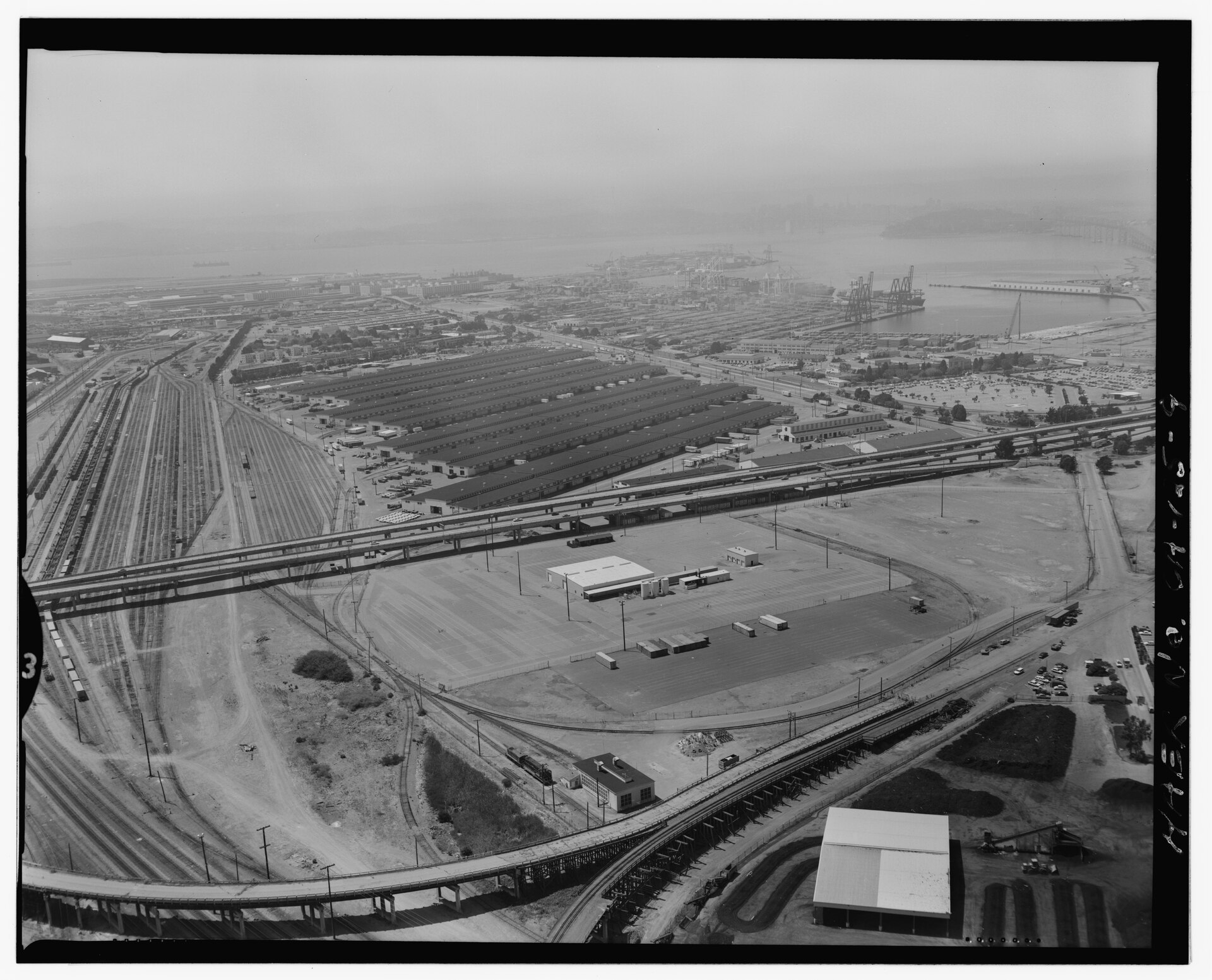
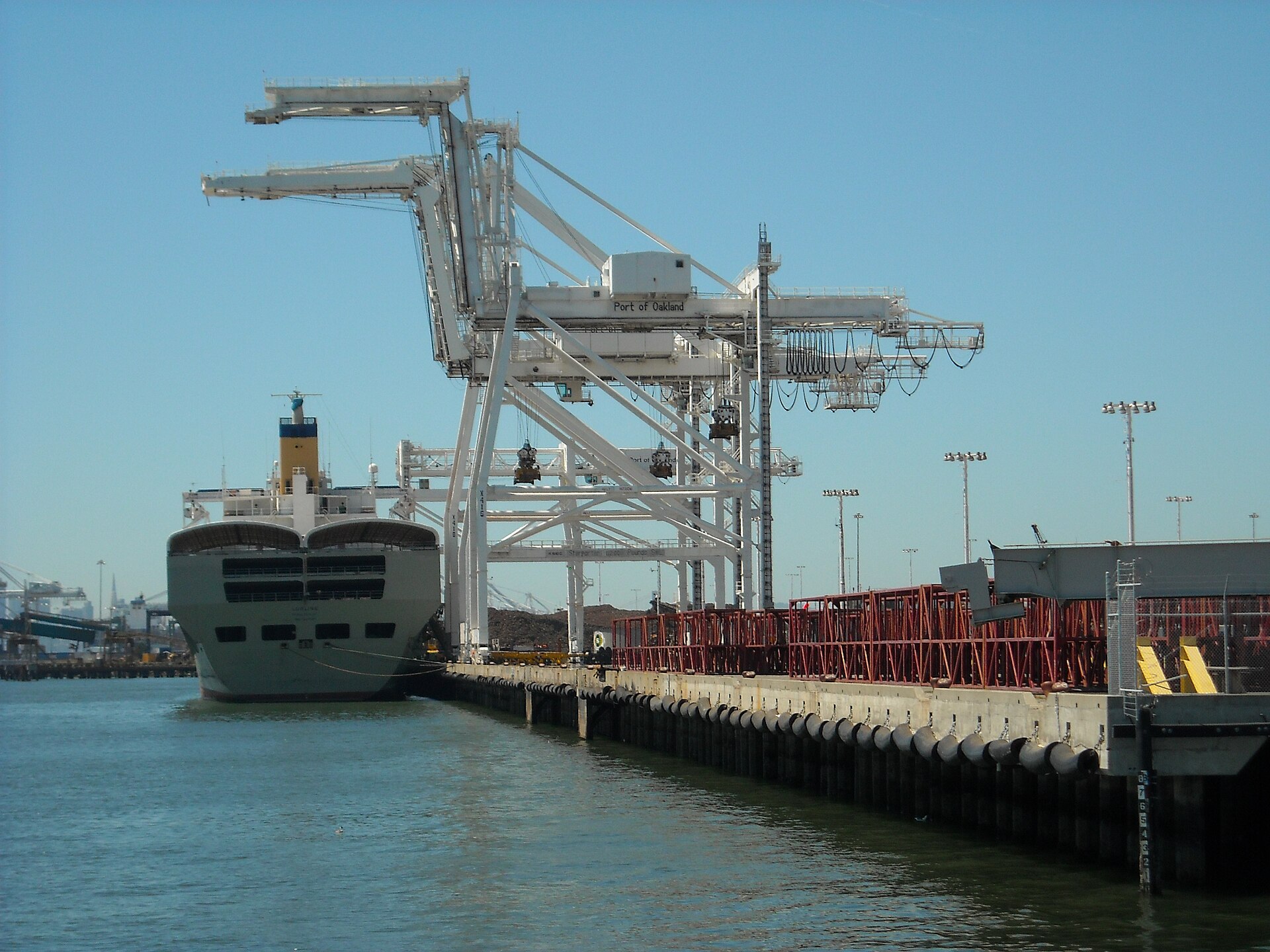
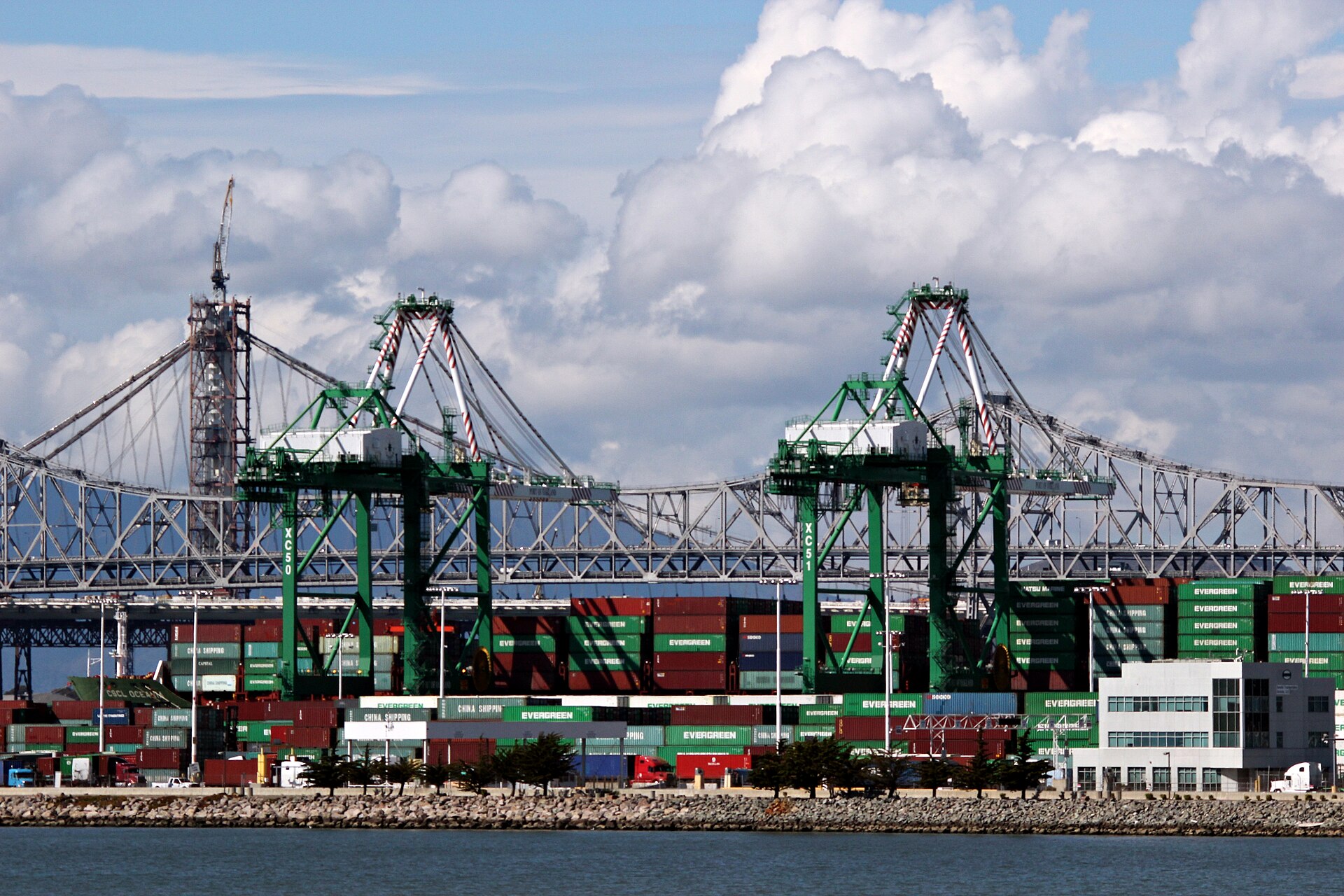
The Port of Oakland is economic oxygen and a top local pollution source: ships, cargo gear, rail, diesel trucks threading residential blocks. In 2002, neighbors working with researchers published Neighborhood Knowledge for Change; Margaret Gordon and Brian Beveridge founded the West Oakland Environmental Indicators Project to keep community science in the room. WOEIP helped force truck-route changes, sat at collaborative tables with EPA and the Air District, and kept hyperlocal monitoring alive when a single rooftop sensor was not enough.
Recent WOCAP progress reporting describes average diesel particulate matter down about 31% from 2017 to 2024 (WOEIP / WOCAP progress reporting), with exposure falling further — and still warns that port and rail pieces of the burden remain stubborn, with some impact zones lagging. Clean Ports funding in the hundreds of millions is now chasing zero-emission gear (program-scale press / agency framing). Progress is not absolution. The afterlife of redlining is measurable in air.
The same shoreline is still fighting a coal terminal. On the former Oakland Army Base — city-owned land near the Bay Bridge foot, not Port property — developer Phil Tagami’s Oakland Bulk Oversized Terminal has spent a decade in court. Court-confirmed The 2016 City Council ban on storing and handling coal did not stick to this project (2018 federal ruling). Oakland terminated the lease; a 2023 Superior Court said that was improper; in 2025 the California Supreme Court declined to hear Oakland’s appeal. Press-reported Oaklandside (Darwin BondGraham, Sep. 3, 2026): Utah’s Permanent Community Impact Fund Board heard a Rural Utah Infrastructure Coalition ask for $45 million toward the hub, with a funding vote pinned to Oct. 1, 2026 in Salt Lake City — coalition director Keith Heaton recommending 80 percent Oakland, the rest Longview, Washington. Three months earlier the Trump administration pledged $75 million and said West Gateway would break ground “this summer” and ship over 12 million tons a year by summer 2028 (Oaklandside, June 4). Treat the pledge as administration-announced. Do not write a groundbreaking nobody has photographed. Tagami’s company says its own analysis found no elevated health risk from coal trains through Oakland, 2013–2021 — developer-claimed. Neighbors and No Coal in Oakland are still trying to make the air the obstacle the courts would not be. Assemblymember Mia Bonta’s AB 40 (Community-First Coal Review Act) passed the Legislature Aug 28, was enrolled Sep 2, and was presented to the Governor Sep 8, 2026 — still not law. It would require a full CEQA EIR before discretionary approval of large coal handling, storage, or export facilities over 5 million short tons a year, applying to discretionary approvals pending or made since June 4, 2026. Governor Newsom’s sign-or-veto deadline is Sep 30, 2026. Utah’s funding vote is now pinned to Oct 1 in Salt Lake City — still not a closed check. The Bulk Commodity Ocean Terminals feasibility study is now coalition-published on the Rural Utah Infrastructure Coalition site (Sep 5, 2026) — sponsor PDF, not an independent audit. Opponent-press citing that study (No Coal in Oakland / Ted Franklin, Sep 8): open storage framed as two ~150k-ton open-air stockpiles; project cost ~$430–625M (vs older developer ~$250M talk); build schedule ~53 months pointing at ~2031 first cargo rather than the Oct 2028 claim. Primary PDF still not extracted here (captcha). A separate RUIC Throughput Fund public hearing was noticed for Sep 10, 2026 in Provo; no minutes/after-action on this page yet. Diesel down 31 percent is not a hall pass for coal dust.
Container cranes @ Port of Oakland, 2009 · Daniel Ramirez · CC BY 2.0